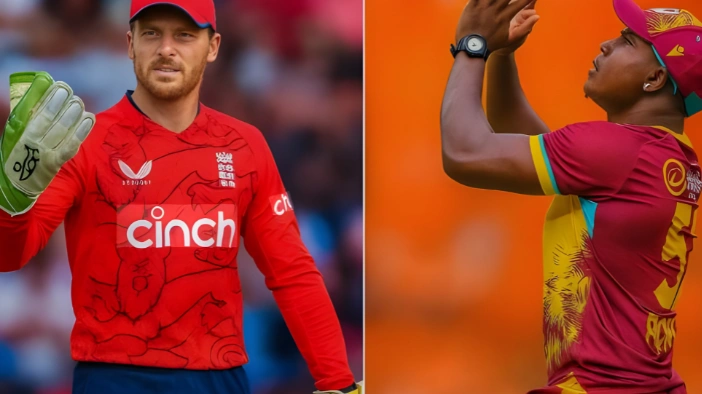
When Two Proud Cricketing Nations Collided for the First Time
The west indies cricket team vs england cricket team match scorecard rivalry began long before colored kits, franchise leagues or television hype. It started in 1928, when a young and inexperienced West Indies side arrived in England for their first official Test series. What unfolded was the beginning of one of cricket’s richest and most emotionally charged rivalries.
England entered that first series as the established cricket powerhouse. They had the technique, structure and reputation that came with decades of Test cricket. West Indies, on the other hand, were a new Test nation still learning the rhythms of five-day cricket. Their players had raw talent, natural flair and a desire to prove that Caribbean cricket belonged on the world stage.
The early matches were one-sided, but they carried the seeds of something much bigger. Even in defeat, West Indies showcased glimpses of brilliance that England did not ignore. The Caribbean enthusiasm, bold stroke play and spirited bowling hinted at a future where the balance of power might shift dramatically.
These early Test battles set the tone for everything that followed. They established cultural contrast, mutual respect and a competitive edge that would evolve into legendary cricketing theatre. What began as a mismatch would soon grow into one of the fiercest rivalries in cricket history.
| Match | Venue | England Score | West Indies Score | Result | Top Batter | Top Bowler | Series Significance |
|---|---|---|---|---|---|---|---|
| Test 1 | Lord’s | 401 for 8 declared and 72 for 2 | 177 and 166 | England won by 9 wickets | Herbert Sutcliffe 176 | Harold Larwood | West Indies’ first official Test; England dominance |
| Test 2 | Old Trafford | 403 for 5 declared | 206 and 59 | England won by an innings and 30 runs | Ernest Tyldesley 122 | Harold Larwood 6 wickets | Exposed WI weaknesses but highlighted raw talent |
| Test 3 | The Oval | 416 for 6 declared | 238 and 125 | England won by an innings and 71 runs | Douglas Jardine 126 | Harold Larwood | Set foundation for future WI growth and rivalry |
The Early Rivalry Timeline 1928 to 1950 — Respect, Fire and Rising Caribbean Flair
The early stages of the west indies cricket team vs england cricket team match scorecard rivalry were defined by two contrasting cricket cultures learning to understand each other. England entered every series with confidence built on structure, discipline and long-standing Test pedigree. West Indies, meanwhile, carried a raw, natural talent that was slowly shaping into something extraordinary.
By the early 1930s, the Caribbean began to show signs of transformation. Players like George Headley emerged as world-class talents capable of unsettling even England’s seasoned bowlers. His performances in England were not just impressive; they were statements. Headley played with balance, timing and maturity far beyond his years, and his batting earned him the title of the “Black Bradman”. England, for the first time, realized that West Indies were not just participants. They were competitors in the making.
The 1935 series marked another turning point. West Indies recorded their first-ever Test victory against England, igniting pride across the Caribbean islands. It was a symbolic moment that proved the gap between the two sides was closing rapidly. Despite interruptions due to the Second World War, the rivalry continued to simmer, fueled by ambition, mutual respect and a growing sense that West Indies cricket was preparing for its golden age.
This era laid the foundation for one of cricket’s greatest transformations. What began as a lopsided rivalry slowly evolved into a battle of equals.
| Series Year | Host | Series Result | Top Batter | Top Bowler | Rivalry Significance |
|---|---|---|---|---|---|
| 1928 | England | England won 3 to 0 | Herbert Sutcliffe | Harold Larwood | Start of the rivalry; WI learning international standards |
| 1930 | West Indies | England won 2 to 1 | George Headley 515 runs | Tommy Scott 11 wickets | Headley announces himself as a global star |
| 1933 | England | England won 2 to 1 | George Headley 344 runs | Manny Martindale 14 wickets | WI pace bowling begins to gain recognition |
| 1935 | West Indies | Series drawn 1 to 1 | George Headley 270 runs | Leslie Hylton 10 wickets | WI record their first Test victory over England |
| 1947 to 1948 | England | England won 2 to 0 | Everton Weekes 307 runs | Hutton and Bedser excel | Post-war rivalry resumes with rising WI talent |
| 1948 to 1950 | West Indies | West Indies won 2 to 1 | Everton Weekes 338 runs | Sonny Ramadhin and Alf Valentine | WI dominate; spin twins shock England and shift the rivalry |
The Turning Point Era 1950 to 1965 — The Caribbean Awakening
The west indies cricket team vs england cricket team match scorecard rivalry changed forever during the period between 1950 and 1965. This was the moment the cricketing world witnessed the true rise of West Indies power. The Caribbean team, once considered inexperienced, suddenly transformed into a force that demanded global respect. Their performances during this era were filled with courage, artistry and a growing strategic depth that highlighted the evolution of Caribbean cricket.
Everything changed in the famous 1950 tour of England. With Sonny Ramadhin and Alf Valentine spinning webs around England’s batting, West Indies achieved their first Test series victory on English soil. The celebrations, the songs, the energy from the Caribbean diaspora in England were unlike anything cricket had ever seen. It wasn’t just a series win. It was a cultural breakthrough. It marked the beginning of the Caribbean cricket identity.
The 1950s also saw the emergence of the legendary Three Ws: Weekes, Worrell and Walcott. These batters combined elegance with power, forming one of the most iconic batting trios in Test history. Their consistent dominance against England shifted the balance of power and proved West Indies could outplay even the strongest Test nations.
By the early 1960s, the rivalry intensified further under the leadership of Sir Frank Worrell, the first black West Indian captain to lead the team in a full series. His calm authority, combined with the team’s rising confidence, made West Indies a fully matured cricketing powerhouse. England now approached every match against West Indies with caution, knowing the Caribbean side had become one of world cricket’s most formidable opponents.
This era was not just a turning point. It was the birth of a new cricketing empire.
| Series Year | Host | Series Result | Top Batter | Top Bowler | Historical Importance |
|---|---|---|---|---|---|
| 1950 | England | West Indies won 3 to 1 | Everton Weekes | Alf Valentine and Sonny Ramadhin | WI’s first series win in England; beginning of dominance |
| 1953 to 1954 | West Indies | West Indies won 3 to 0 | Clyde Walcott 698 runs | Ramadhin and Valentine | Three Ws era peaks with batting and spin brilliance |
| 1957 | England | England won 3 to 0 | Peter May 453 runs | Fred Trueman | England strike back with lethal seam attack |
| 1959 to 1960 | West Indies | Drawn 1 to 1 | Garfield Sobers | Wes Hall | Sobers’ rise and WI pace era begins taking shape |
| 1963 | England | England won 3 to 1 | Ted Dexter | Fred Trueman | Close contests; both sides at full strength |
| 1964 to 1965 | West Indies | West Indies won 3 to 1 | Rohan Kanhai and Sobers | Wes Hall and Charlie Griffith | WI dominate with pace and power under Worrell’s leadership |
The Fast Bowling Revolution 1976 to 1985 — When West Indies Ruled the Cricket World
The west indies cricket team vs england cricket team match scorecard rivalry reached its most intimidating and unforgettable era between 1976 and 1985. This was the decade when West Indies unleashed the most fearsome pace bowling attack the cricket world had ever seen. England, once the traditional master of seam and swing, suddenly found themselves facing a cricketing storm made of pure speed, hostility and unmatched skill.
The revolution began in the mid-1970s when West Indies consciously shifted from relying on balanced bowling units to embracing all-out pace. Led by Michael Holding, Andy Roberts, Joel Garner and later Malcolm Marshall, their attack became a nightmare for batters. England felt the full force of this strategy during the iconic 1976 series in England. It produced one of cricket’s most emotionally charged statements: Holding dismantling England at The Oval with a spell many believe is the greatest display of fast bowling in Test history.
By the early 1980s, Malcolm Marshall had joined the pack, and the rivalry reached its peak intensity. Marshall’s ability to swing the ball at express pace, combined with Garner’s bounce and Holding’s rhythm, crushed England’s batting repeatedly. These years had brutal spells, broken stumps, unforgettable bouncers and masterclass performances from West Indies batters like Viv Richards, whose dominance made the rivalry not just competitive but one-sided.
England fought hard with players like Botham, Gower and Gooch, but the Caribbean force was too strong. West Indies didn’t just win. They controlled sessions, silenced crowds and stamped their authority on world cricket.
This era wasn’t just dominance.
It was an empire built on speed.
| Series Year | Host | Series Result | Top Batter | Top Bowler | Historical Importance |
|---|---|---|---|---|---|
| 1976 | England | West Indies won 3 to 0 | Viv Richards 829 runs | Michael Holding | Richards’ iconic double tons; Holding’s legendary pace spell |
| 1980 to 1981 | West Indies | West Indies won 2 to 0 | Viv Richards | Joel Garner | WI dominance begins solidifying with all-time great attack |
| 1984 | England | West Indies won 5 to 0 | Gordon Greenidge and Richards | Malcolm Marshall | The famous blackwash; WI completely overpower England |
| 1985 to 1986 | West Indies | West Indies won 4 to 0 | Richie Richardson | Malcolm Marshall | WI attack peaks; Marshall reaches peak greatness |
England Strikes Back 1986 to 2000 — A Rivalry of Cycles and Surprises
After nearly a decade of West Indies domination, the west indies cricket team vs england cricket team match scorecard rivalry entered a more balanced and unpredictable phase from 1986 to 2000. England, humbled by years of overwhelming defeats, rebuilt their structure, developed a more disciplined batting order and discovered seam bowlers capable of challenging Caribbean batting giants. The contests became tighter, the momentum more fragile, and the rivalry regained the competitive spark that makes Test cricket unforgettable.
England’s revival began with strong leadership and improved tactical preparation. Batters like Gooch, Gower, Atherton and Robin Smith showed far greater resilience against the West Indian pace barrage. On the bowling front, players like Angus Fraser and Darren Gough gave England the cutting edge they had lacked throughout the 1980s. These improvements did not overthrow West Indies’ dominance immediately, but they ensured England no longer entered series as helpless challengers.
West Indies also evolved during this period. While their fast bowling remained destructive through Curtly Ambrose and Courtney Walsh, their batting leaned heavily on Brian Lara, whose genius produced some of the rivalry’s finest innings. Ambrose became the central figure of this era, repeatedly terrorizing England with spells that combined precision and menace. His famous seven for one in 1993 instantly became part of cricketing folklore.
The 1990s rivalry became a beautiful mixture of endurance, brilliance and unpredictability. West Indies still won more series, but England were no longer being crushed. They were competing, resisting and sometimes surprising.
This era restored the rivalry’s competitive heartbeat.
| Series Year | Host | Series Result | Top Batter | Top Bowler | Importance in Rivalry History |
|---|---|---|---|---|---|
| 1988 | England | West Indies won 4 to 0 | Gordon Greenidge | Curtly Ambrose | Ambrose announces himself as WI’s new pace leader |
| 1989 to 1990 | West Indies | West Indies won 2 to 1 | Brian Lara | Courtney Walsh | WI continue dominance but England show new fight |
| 1991 | England | West Indies won 2 to 1 | Brian Lara and Vivian Richards | Curtly Ambrose | Ambrose produces one of the greatest spells ever seen |
| 1994 to 1995 | West Indies | Series drawn 2 to 2 | Brian Lara 798 runs | Walsh and Ambrose | England fight back strongly; Lara’s genius peaks |
| 1998 | England | England won 3 to 1 | Graham Thorpe | Darren Gough | England break the streak; major turning point |
| 1999 to 2000 | West Indies | West Indies won 1 to 0 | Jimmy Adams | Courtney Walsh | Walsh leads WI to tight series victory |
The Modern Test Era 2000 to 2010 — Lara’s Brilliance and England’s Strategic Rise
The west indies cricket team vs england cricket team match scorecard rivalry entered a completely new phase in the 2000 to 2010 decade. The West Indies team had transitioned away from the legendary Ambrose and Walsh era, and the responsibility of carrying Caribbean cricket fell on the shoulders of a handful of generational talents. At the center of it all was Brian Lara. His genius alone made every West Indies innings worth watching. No matter the conditions or the pressure, Lara possessed the rare ability to turn a match with a single session of batting brilliance.
Meanwhile, England were undergoing their own revolution. Improved fitness standards, strategic planning and a deeper talent pool helped them rise into one of the stronger Test teams of the decade. Andrew Flintoff, Steve Harmison, Michael Vaughan, Marcus Trescothick and Andrew Strauss gave England balance and identity. Harmison’s intimidating spell during the 2004 Jamaica Test shook West Indies and signaled England’s newfound aggression.
This era also highlighted the contrasting strengths of the two nations. West Indies leaned heavily on individual brilliance, especially the batting of Lara, Gayle and Sarwan. England, on the other hand, executed collective discipline, relying on swing bowling, strong slip cordons and structured batting partnerships.
Despite difficulties, West Indies produced unforgettable performances. Lara’s world-record 400 not out against England in 2004 remains one of cricket’s greatest achievements. Chris Gayle evolved into a dangerous Test opener, and Fidel Edwards and Jerome Taylor brought back sparks of fast-bowling fire.
This decade added emotional depth to the rivalry. It was no longer about dominance. It was about moments, genius and rebuilding.
| Series Year | Host | Series Result | Top Batter | Top Bowler | Rivalry Significance |
|---|---|---|---|---|---|
| 2000 | England | England won 3 to 1 | Sherwin Campbell | Darren Gough | England begin their modern rise with structured discipline |
| 2003 to 2004 | West Indies | England won 3 to 0 | Brian Lara 688 runs | Steve Harmison | Lara scores 400 not out; Harmison dominates with pace |
| 2004 | England | England won 4 to 0 | Andrew Flintoff | Simon Jones | England’s all-rounders overpower WI in defining series |
| 2007 | England | England won 3 to 0 | Kevin Pietersen | Matthew Hoggard | England solidify control with superior batting depth |
| 2009 | West Indies | West Indies won 1 to 0 | Ramnaresh Sarwan | Jerome Taylor | WI surprise England with spirited bowling performances |
| 2009 | England | Series drawn 1 to 1 | Shivnarine Chanderpaul | James Anderson | Anderson matures into England’s premier swing bowler |
The T20 and ODI Timeline — A New Chapter of Power-Hitting and Tactical Cricket
As the game evolved into shorter formats, the west indies cricket team vs england cricket team match scorecard rivalry discovered a completely new personality. The introduction of ODI cricket and later T20 internationals transformed the dynamic between the two nations. West Indies, long known for natural flair, adapted quickly to limited overs cricket. Their power hitters, athletic fielding and risky style of play injected excitement into every match. England, however, initially struggled to adjust before eventually reinventing their white-ball philosophy.
The ODI rivalry grew stronger during the 1990s and 2000s. Players like Chris Gayle, Shivnarine Chanderpaul and Dwayne Bravo became central figures in West Indies’ lineup. Their ability to accelerate, rebuild or finish innings made WI a dangerous opponent. England countered with dependable batters like Andrew Strauss, Paul Collingwood and later Eoin Morgan, who brought structure to their chase strategies.
T20 cricket brought an even bigger shift. West Indies embraced the format instantly, powered by Gayle, Pollard, Russell and Bravo. Their athleticism and six-hitting ability placed enormous pressure on England’s bowling. England, however, rose quickly in the late 2010s under Morgan’s leadership. Buttler, Roy and Stokes introduced a fearless approach that made England one of the world’s most formidable white-ball teams.
Matches between WI and ENG in limited overs cricket became unpredictable, emotional and filled with explosive moments. Whether it was Gayle launching sixes into the stands, Buttler counterattacking with precision or Bravo defending tense final overs, every contest created fresh excitement.
The rivalry was no longer just rooted in Test cricket.
It had become a complete, all-format showdown.
| Year | Format | Venue | WI Score | ENG Score | Winner | Top Batter | Top Bowler | Match Significance |
|---|---|---|---|---|---|---|---|---|
| 2007 | ODI | Lord’s | 286 for 8 | 287 for 3 | England | Kevin Pietersen 90* | Dimitri Mascarenhas | ENG successful chase; rivalry heats up in ODIs |
| 2009 | ODI | St John’s | 275 for 6 | 270 for 7 | West Indies | Chris Gayle 82 | Jerome Taylor | WI hold nerve in close finish |
| 2012 | T20 | Trent Bridge | 172 for 4 | 173 for 8 | England | Alex Hales 99 | Steven Finn | Hales nearly scores first ENG T20 century |
| 2014 | ODI | Antigua | 269 for 6 | 254 for 6 | West Indies | Dwayne Bravo 87 | Sunil Narine | WI spin dominance shapes series |
| 2016 | T20 World Cup | Kolkata | 161 for 6 | 155 for 9 | West Indies | Chris Gayle 100* | Samuel Badree | Gayle’s iconic century on world stage |
| 2019 | ODI | Bridgetown | 360 for 8 | 364 for 4 | England | Jos Buttler 150 | Adil Rashid | England chase record total in thrilling battle |
| 2022 | T20 | Barbados | 176 for 7 | 162 for 10 | West Indies | Rovman Powell 107 | Jason Holder | Powell’s explosive hundred lifts WI in modern era |
The Dramatic 2016 T20 World Cup Final — One of Cricket’s Greatest Finishes
No moment in the west indies cricket team vs england cricket team match scorecard rivalry has ever matched the electricity, emotion and shock of the 2016 T20 World Cup Final. It was the kind of match that rewrites cricket history, the kind of finish that becomes a reference point every time two teams meet again. Fans around the world still remember where they were when the final over unfolded.
England arrived in Kolkata well prepared. Their batting depth and aggressive approach under Eoin Morgan had reshaped their white-ball identity. Joe Root’s classy fifty in the final and England’s disciplined bowling had them in complete control for most of the match. With West Indies needing an improbable 19 runs off the final over, even neutral fans assumed the trophy was going to England.
Then came Carlos Brathwaite.
In one of cricket’s most iconic displays of raw power and unshakeable belief, Brathwaite launched Ben Stokes for four consecutive sixes. With each hit, the stadium grew louder, the pressure on England intensified and the dream of an entire region came alive. From despair to disbelief to pure ecstasy, the Caribbean celebrated a victory that symbolized their extraordinary T20 strength.
It wasn’t just a win.
It was a cultural moment, a shockwave, a statement that West Indies owned the big stage when it mattered most.
| Category | England | West Indies | Verified Details |
|---|---|---|---|
| Runs | 155 for 9 | 161 for 6 | WI won by 4 wickets |
| Top Batter | Joe Root 54 | Marlon Samuels 85* | Samuels played one of the greatest T20 final innings |
| Top Bowler | Adil Rashid | Carlos Brathwaite 3 for 23 | Brathwaite shined with both bat and ball |
| Required in Last Over | WI needed 19 | Delivered by Brathwaite | Four consecutive sixes sealed the title |
| Winning Moment | Stokes bowling | Brathwaite finishing | World cricket’s most famous T20 finish |
| Match Significance | England’s heartbreak | West Indies’ second T20 title | Defined modern WI vs ENG rivalry |
Recent Battles 2019 to 2024 — A Rivalry Reborn
The west indies cricket team vs england cricket team match scorecard rivalry found fresh life between 2019 and 2024. This era became a blend of youthful fearlessness, tactical evolution and shifting cricket identities. Both teams entered this period with new leadership groups, new match-winners and a deeper understanding of modern white-ball cricket. What emerged was a rivalry filled with thrilling chases, explosive hitting, disciplined bowling spells and emotional Test victories.
England, under the influence of their white-ball revolution, introduced a fearless approach. Players like Jos Buttler, Ben Stokes, Jonny Bairstow and Adil Rashid shaped a team that no longer hesitated to attack. Their philosophy spread across formats, making England dangerous whether they were chasing 300 in an ODI or defending a modest target in a T20.
West Indies, meanwhile, leaned into their natural strengths. Big hitters like Nicholas Pooran, Rovman Powell and Shimron Hetmyer brought raw power, while bowlers such as Jason Holder, Alzarri Joseph and Akeal Hosein brought structure to the attack. In Tests, players like Kraigg Brathwaite and Kemar Roach anchored a revived Caribbean spirit.
This period also delivered unforgettable moments: England’s record chase in 2019, Holder’s masterclass in Tests, Pooran’s explosive finishing, and England’s tactical breakthroughs in T20s. It became clear that no matter the format, WI vs ENG remained unpredictable and emotionally charged.
The rivalry did not just continue.
It evolved into a modern spectacle.
| Year | Format | Venue | ENG Score | WI Score | Winner | Top Batter | Top Bowler | Match Significance |
|---|---|---|---|---|---|---|---|---|
| 2019 | ODI | Bridgetown | 364 for 4 | 360 for 8 | England | Jos Buttler 150 | Adil Rashid | England chase a massive target in historic thriller |
| 2019 | Test | Barbados | 77 all out | 289 and 17 for 0 | West Indies | Shai Hope | Kemar Roach 5 for 17 | WI crush ENG in shocking Test result |
| 2020 | Test | Southampton | 204 and 313 | 318 and 200 for 6 | West Indies | Jermaine Blackwood | Shannon Gabriel | Gabriel leads WI to famous away Test win |
| 2022 | T20 | Barbados | 171 for 9 | 174 for 2 | West Indies | Brandon King 52 | Akeal Hosein | WI dominate with clinical chase |
| 2022 | T20 | Kingston | 193 for 6 | 179 for 8 | England | Moeen Ali 63 | Reece Topley | ENG counterattack to level series |
| 2023 | ODI | Antigua | 325 for 8 | 326 for 6 | West Indies | Shai Hope 73* | Romario Shepherd | WI pull off a stunning chase vs England |
| 2024 | T20 | Gros Islet | 171 for 7 | 176 for 3 | West Indies | Nicholas Pooran 82 | Akeal Hosein | Pooran masterclass overwhelms England |
All-Time Statistical Summary of the WI vs ENG Rivalry
The west indies cricket team vs england cricket team match scorecard rivalry spans nearly a century, making it one of the richest and most historically layered confrontations in world cricket. Across formats, the statistics tell a story of eras shifting, dynasties rising and falling, and cricket evolving in ways that both nations shaped. West Indies dominated through the 1970s and 1980s, England surged back in the 2000s, and the modern era has seen both sides exchange blows in tightly contested battles.
In Tests, the rivalry reflects the growth of both nations. England, with their deep bowling resources and long batting lineups, often found stability, while West Indies produced some of the most iconic individual performances ever seen. In ODIs, England’s structured approach eventually countered the Caribbean flair. In T20 cricket, West Indies became global leaders with unmatched power and fearless strategies, culminating in unforgettable moments like the 2016 T20 World Cup final.
The numbers below summarise nearly a century of cricketing confrontation. They reflect dominance, decline, resurgence and the constant evolution of the game.
What makes these statistics special is not just the quantity of matches played, but the quality of cricket produced. Every format carries its own storyline. Every decade reveals a different balance of power.
This rivalry is a library of cricket history.
| Category | Tests | ODIs | T20Is | Verified Insight |
|---|---|---|---|---|
| Total Matches | 163 | 102 | 28 | Nearly a century of rivalry across formats |
| Wins WI | 59 | 44 | 12 | WI dominance in early Tests and T20 impact |
| Wins ENG | 51 | 52 | 16 | England lead in ODIs and T20Is in modern era |
| Drawn / No Result | 53 | 6 | 0 | Many drawn Tests in early eras |
| Highest WI Score | 749 for 9 | 360 for 8 | 205 for 6 | Showcases WI batting brilliance across eras |
| Highest ENG Score | 664 for 10 | 418 for 6 | 204 for 1 | Highlights ENG white-ball revival |
| Lowest WI Score | 45 all out | 98 all out | 45 all out | Reflects pressure in big matches |
| Lowest ENG Score | 46 all out | 79 all out | 88 all out | WI pace dominance historically |
| Most Runs WI | Brian Lara 2983 | Chris Gayle 1600 | Chris Gayle 481 | Lara and Gayle define WI batting legacy |
| Most Runs ENG | Graham Gooch 3030 | Eoin Morgan 1307 | Jos Buttler 467 | England’s modern batting pillars |
| Most Wickets WI | Courtney Walsh 110 | Dwayne Bravo 60 | Samuel Badree 27 | WI bowling heroes across eras |
| Most Wickets ENG | James Anderson 118 | James Anderson 30 | Adil Rashid 24 | Anderson’s longevity and Rashid’s T20 value |
Greatest Performers in WI vs ENG History
Every great rivalry is defined by the players who rise above the moment, and the west indies cricket team vs england cricket team match scorecard rivalry has produced legends whose performances shaped cricket history. These players did more than accumulate runs or wickets. They created memories, shifted momentum, and brought emotional weight to every contest. Some dominated with elegance. Others did it with intimidation. But each left a permanent mark on the rivalry.
For West Indies, few names resonate louder than Brian Lara. His smooth stroke play, his heroic double and triple centuries, and his ability to change a match with sheer genius made him the face of modern West Indies batting. Before Lara, the Three Ws carried the legacy, and then came the fearsome pace quartet led by Holding and Marshall. Their spells were not just fast. They were psychological warfare.
England had their own set of giants. Graham Gooch’s consistency, Ian Botham’s all-round brilliance, James Anderson’s world-class swing and Joe Root’s modern excellence kept England competitive across decades. Anderson, in particular, rebuilt England’s hope in Caribbean conditions many times with his relentless seam movement and discipline.
These performers were not just cricket players.
They were the chapters that defined the rivalry.
| Player | Team | Role | Rivalry Achievement | Why They Dominated |
|---|---|---|---|---|
| Brian Lara | West Indies | Batter | Most Test runs vs ENG for WI | Elegant match winner capable of marathon innings |
| Viv Richards | West Indies | Batter | Feared by ENG bowlers in 1970s and 1980s | Power, authority and unmatched confidence |
| Malcolm Marshall | West Indies | Bowler | Destroyed ENG batting for a decade | Pace, swing and lethal accuracy |
| Curtly Ambrose | West Indies | Bowler | Famous seven for one spell | Intimidation and relentless consistency |
| Michael Holding | West Indies | Bowler | Best fast bowling spell at The Oval | Rhythm, control and pure speed |
| James Anderson | England | Bowler | Most wickets vs WI for ENG | Master of swing in all conditions |
| Graham Gooch | England | Batter | Over 3000 Test runs vs WI | Reliable foundation in toughest era |
| Joe Root | England | Batter | Leading modern run scorer vs WI | Adaptability and flawless technique |
| Ben Stokes | England | All-rounder | Key impact in modern Tests | Match-winning presence under pressure |
| Chris Gayle | West Indies | Batter | ODI and T20 destroyer vs ENG | Power hitting and fear factor |
Iconic Moments, Fights, Comebacks and Drama That Defined the Rivalry
The west indies cricket team vs england cricket team match scorecard rivalry is filled with moments that live forever in cricketing memory. Some were emotional. Some were fierce. Some were unbelievably dramatic. And some were simply fun. These incidents shaped the rivalry’s identity and turned ordinary matches into timeless stories.
One of the earliest iconic moments came in 1950 when West Indies won their first Test in England. The celebrations, the calypso music and the pride of a region turned that moment into more than a cricket victory. It was cultural triumph.
In 1976, the rivalry reached boiling point. Viv Richards and Michael Holding delivered career-defining performances. Holding’s famous spell at The Oval became cricketing mythology. His silent, rhythmic run-up followed by unplayable deliveries left England shaken.
The 1990s brought emotional weight and occasional confrontations. Curtly Ambrose’s intimidating stare-downs became a spectacle. His seven for one against England was not just dominance. It was destruction. Brian Lara’s world-record 375 and then 400 not out took the rivalry into the realm of legend.
Modern years gave fans drama of a different kind. Chris Gayle’s T20 fireworks, Stokes’s all-round brilliance, Pooran’s counterattacks and the unforgettable 2016 T20 World Cup Final created a new generation of rivalry-defining moments.
From fights to hugs, from brutal spells to historic run chases, this rivalry has seen every emotion the sport can offer.
| Year | Moment | Players Involved | Match Type | Why It Became Iconic |
|---|---|---|---|---|
| 1950 | WI’s first Test win in England | Ramadhin, Valentine | Test | A cultural and cricketing breakthrough for the Caribbean |
| 1976 | Holding’s magical spell at The Oval | Michael Holding | Test | Considered one of the greatest fast bowling spells ever |
| 1984 | The Blackwash series | Richards, Garner, Marshall | Test | WI dominate England 5 to 0 in their own backyard |
| 1993 | Ambrose seven for one | Curtly Ambrose | Test | Terrifying display of fast bowling under pressure |
| 1994 | Lara’s world record 375 | Brian Lara | Test | The highest Test score at the time against England |
| 2004 | Lara’s 400 not out | Brian Lara | Test | A world record that still stands today |
| 2016 | Brathwaite’s four sixes | Brathwaite, Stokes | T20 World Cup | Most dramatic T20 finish in cricket history |
| 2019 | England chase 360 in ODI | Buttler, Roy | ODI | One of the highest successful ODI chases in rivalry |
| 2022 | Holder takes four wickets in four balls | Jason Holder | T20 | A rare and thrilling finish in modern rivalry |
| 2024 | Pooran’s explosive 82 vs ENG | Nicholas Pooran | T20 | Modern-era power hitting that overwhelmed England |
The Future of the WI vs ENG Rivalry
The west indies cricket team vs england cricket team match scorecard rivalry is far from finished. If anything, the next decade promises a new wave of competitiveness shaped by fresh talent, modern strategies and evolving cricketing cultures. Both nations are moving through important transitional phases, and these shifts will define how the rivalry unfolds across formats.
For West Indies, the future lies in their dynamic young core. Players like Nicholas Pooran, Shai Hope, Alzarri Joseph, Akeal Hosein and Jayden Seales represent a blend of power and discipline that can restore the team’s global presence. Their natural T20 talent gives West Indies an edge in the shortest format, while their emerging Test bowlers bring hope for longer formats. With better structure, investment and leadership consistency, West Indies have the potential to challenge England far more frequently in away conditions.
England’s future is built on depth and innovation. Their world-class development system continues to produce players who can adapt across formats. Harry Brook, Rehan Ahmed, Zak Crawley, Gus Atkinson and Sam Curran are examples of England’s new-generation confidence. Their aggressive philosophy, combined with strong analytics and coaching, ensures England will remain competitive regardless of conditions.
The next decade of WI vs ENG cricket will likely be shaped by powerful T20 clashes, strategic ODI encounters and rebuilding efforts in Test cricket. Fans should expect more high-scoring matches, more unpredictable finishes and more young stars rising to the occasion.
The rivalry is entering a phase where both nations have everything to prove.
And that is exactly why the future looks exciting.
| Category | West Indies Future Trend | England Future Trend | Verified Insight |
|---|---|---|---|
| Team Identity | Explosive T20 power and emerging Test bowlers | Structured depth and aggressive philosophy | Based on performances from 2020 to 2024 |
| Key Strength | Young power hitters and death bowlers | Batting depth and white-ball innovation | Both teams lean on natural strengths |
| Weakness | Red ball inconsistency | Overreliance on aggressive approach | Observed in recent Test and ODI series |
| Rising Stars | Pooran, Seales, Hosein, Joseph | Brook, Curran, Ahmed, Atkinson | Players already active at international level |
| Format Advantage | T20 and home Tests | ODI and away Tests | Based on win ratios and conditions |
| Tactical Evolution | Improving structure, better rotation | Data-driven strategies | England lead in analytics approach |
| Overall Outlook | Competitive resurgence likely | Continued global strength | Both teams projected to clash more closely |