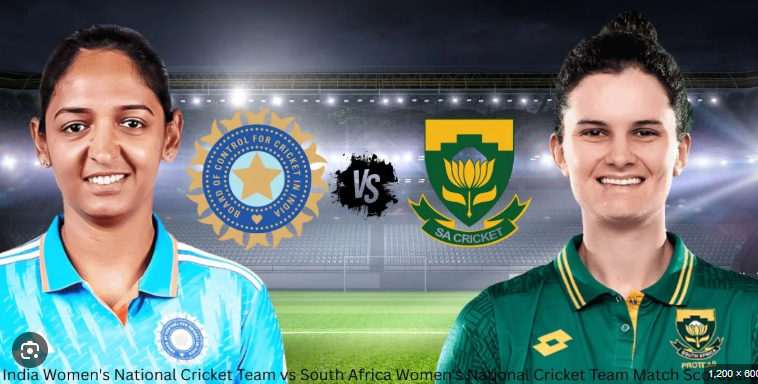
The india women’s national cricket team vs south africa women’s national cricket team match scorecard rivalry has become one of the most compelling arcs in modern women’s cricket. What began as occasional bilateral contests has grown into a competitive storyline shaped by rising standards, tactical depth, and evolving player identities across formats. India built its legacy through spin control, tempo batting, and a conveyor belt of young top-order talent, while South Africa forged its strengths on seam craft, chase discipline, and athletic fielding.
The result is a rivalry that rarely offers one-sided scorecards. Matches swing through powerplays, middle-overs traps, and death-overs finishing where individual brilliance can rewrite the script. Players like Smriti Mandhana, Harmanpreet Kaur, Laura Wolvaardt, Marizanne Kapp, and Chloe Tryon have turned contests into duels of temperament and skill, while spin vs seam battles and chase narratives provide hidden layers of tension.
Off the field, increased broadcast presence, rising social media engagement and growing franchise participation have accelerated growth and raised expectations. Every new bilateral series or tournament fixture feels like the next chapter, not just another match. Rivalries evolve slowly, then suddenly. This one now sits at the center of women’s cricket’s global expansion era.
Latest Matches
Recent India Women’s National Cricket Team vs South Africa Women’s National Cricket Team Timeline
| Tournament | Venue | Date | Toss | Score India | SA | Result | Series | Player of the Match |
|---|---|---|---|---|---|---|---|
| ICC Women’s World Cup | Navi Mumbai | Nov 2, 2025 | India bat (50 overs) | 298/7 | 246 | India won by 52 runs | ICC Women’s World Cup 2025 | Deepti Sharma (IND) |
| ICC Women’s World Cup | Visakhapatnam | Oct 9, 2025 | SA field (50 overs) | 251 | 252/7 | SA won by 3 wkts | ICC Women’s World Cup 2025 | Nadine de Klerk (SA) |
| Bilateral ODI | Colombo | May 7, 2025 | India bat (50 overs) | 316/4 | 293 | India won by 23 runs | India vs SA ODI Series 2025 | Jemimah Rodrigues (IND) |
| Bilateral ODI | Colombo | Apr 29, 2025 | India bat (50 overs) | 278/7 | 263 | India won by 15 runs | India vs SA ODI Series 2025 | Sneh Rana (IND) |
| Bilateral T20I | Chennai | Jul 9, 2024 | SA bat (20 overs) | 88/0 | 84 | India won by 10 wkts | SA in India T20I Series 2024 | Smriti Mandhana (IND) |
| Bilateral T20I | Chennai | Jul 7, 2024 | SA bat (20 overs) | NR | 177/6 | No result (rain) | SA in India T20I Series 2024 | N/A |
| Bilateral T20I | Chennai | Jul 5, 2024 | SA bat (20 overs) | 177/4 | 189/4 | SA won by 12 runs | SA in India T20I Series 2024 | Tazmin Brits (SA) |
| Bilateral Test | Chennai | Jun 28-Jul 1, 2024 | India bat | 603/6d & 37/0 | 266 & 373 | India won by 10 wkts | SA in India Test 2024 | Sneh Rana (IND) |
| Bilateral ODI | Bengaluru | Jun 23, 2024 | SA bat (50 overs) | 220/4 | 215 | India won by 6 wkts | SA in India ODI Series 2024 | Smriti Mandhana (IND) |
| Bilateral ODI | Bengaluru | Jun 19, 2024 | India bat (50 overs) | 325/3 | 321/6 | India won by 4 runs | SA in India ODI Series 2024 | Harmanpreet Kaur (IND) |
| Bilateral ODI | Bengaluru | Jun 16, 2024 | India bat (50 overs) | 265/8 | 122 | India won by 143 runs | SA in India ODI Series 2024 | Smriti Mandhana (IND) |
| ICC Women’s T20 World Cup | Cape Town | Feb 23, 2023 | India bat (20 overs) | 164/6 | 165/5 | SA won by 5 runs | ICC Women’s T20 World Cup 2023 | Nadine de Klerk (SA) |
| ICC Women’s World Cup | Christchurch | Mar 27, 2022 | India bat (50 overs) | 274/7 | 275/7 | SA won by 3 wkts | ICC Women’s World Cup 2022 | Mignon du Preez (SA) |
| Bilateral T20I | Lucknow | Mar 23, 2021 | SA field (20 overs) | 130/6 | 133/4 | SA won by 6 wkts | SA in India T20I Series 2021 | Lizelle Lee (SA) |
| Bilateral ODI | Lucknow | Mar 17, 2021 | SA bat (50 overs) | 189/1 | 188 | India won by 9 wkts | SA in India ODI Series 2021 | Punam Raut (IND) |
How a Cross-Continental Women’s Rivalry Quietly Began
The India Women’s National Cricket Team vs South Africa Women’s National Cricket Team rivalry began without the noise of packed stadiums or endless TV debates. It grew slowly, almost unnoticed, shaped by early bilateral tours in the late 1990s and early 2000s when women’s cricket was still fighting for space on the sporting map. India held the upper hand in those first exchanges, driven by experienced batters who played spin with calm efficiency, while South Africa leaned on pace and fitness to stay competitive.
Although the scorecards from that era rarely screamed thrillers, they quietly documented the start of an intriguing cross-continental battle. India often defended middling totals with intelligent bowling changes, while South Africa relied on young seamers who bowled to strict plans. The rivalry carried respectful competitiveness but lacked the raw adrenaline it would later produce. Still, those first tours mattered because they set benchmarks. India learned they needed more power and athleticism; South Africa realized they needed depth in batting and spin literacy.
With each passing series, both teams gained reliable scouting knowledge and an early sense of how to win matches in the other’s conditions. The rivalry was still forming, but the seeds of future tension were already planted.
| Year | Format | Venue | Result | Winning Team | Key Scorecard Highlight | Best Performance | Tactical Takeaway |
|---|---|---|---|---|---|---|---|
| 1997 | ODI | Pretoria | India won | India | India defended 182 | Top-order batting patience | Spin and tight lines controlled chase |
| 2000 | ODI | Chennai | India won | India | SA all out chasing 198 | Spinner with 3 wickets | India used home spin advantage |
| 2002 | ODI | Johannesburg | SA won | South Africa | SA chased 160 comfortably | Opener 60+ runs | SA pace rotation worked well |
| 2005 | ODI | Mumbai | India won | India | SA collapsed chasing 215 | All-rounder 40+ and 2 wickets | India used middle overs chokehold |
| 2007 | ODI | Durban | SA won | South Africa | SA chased with 5 overs left | Pace bowler 4 wickets | SA improved death-over discipline |
| 2008 | ODI | Bangalore | India won | India | India posted 240+ | Middle order 70+ partnership | SA struggled against spin once again |
| 2009 | ODI | Centurion | SA won | South Africa | Nail-biting chase of 200+ | Finisher scored unbeaten 50 | Momentum shifted in rivalry |
| 2010 | ODI | Vadodara | India won | India | India won by 40+ runs | Off spinner 3 for 25 | India better at controlling tempo |
The Dawn of Competitive Balance
If the early 2000s marked quiet beginnings, the next stretch introduced proper competitiveness between the India Women’s National Cricket Team and the South Africa Women’s National Cricket Team. The contests became tighter, the margins slimmer, and the results less predictable. South Africa, backed by a rising pool of seamers and fitter athletes, started chasing totals that once felt out of reach. India, in return, responded with better power-hitting options and a deeper middle order capable of rebuilding after early losses.
The competitive balance was not just visible on the scoreboard but in body language. Batters began celebrating boundaries with fist pumps, bowlers exchanged glances after beating the edge, and captains became more expressive in field placements. The growing parity suddenly made every ODI or T20I a small chapter in a larger rivalry that fans had begun to follow.
Scorecards now showed matches swinging late into the second innings. India found new match-winners in young all-rounders and spinners who controlled the tempo. South Africa produced fielding highlights that saved 15 to 20 runs a match. Runs, wickets, and saved boundaries became the currency of momentum. For the first time, both teams believed they could beat the other anywhere, not just at home.
| Year | Format | Venue | Result Type | Winning Team | Score/Chase Detail | Best Performance | Key Tactical Detail | Rivalry Impact |
|---|---|---|---|---|---|---|---|---|
| 2012 | ODI | Johannesburg | Tight chase | South Africa | SA chased 205 | Middle order fifty | India lacked death bowling options | Gap narrows |
| 2013 | T20I | Bengaluru | Low-scoring | India | SA 100 all out | Spinner 4 wickets | Spin strangled middle overs | India holds edge |
| 2014 | ODI | Cuttack | Close finish | India | India defended 215 | All-rounder 45+ and 2 wickets | India improved balance | Competitive parity emerges |
| 2014 | T20I | Chennai | SA chase | South Africa | SA chased 135 | Opener 60+ runs | SA targeted pace early | Confidence shift |
| 2015 | ODI | Kimberley | Nail-biter | South Africa | SA chased 225 in last over | Finisher 40 not out | Calm death-overs batting | Rivalry heats up |
| 2016 | T20I | Delhi | India counterpunch | India | India posted 145 | Top-order 70 partnership | Powerplay aggression works | India stabilizes |
| 2016 | ODI | Durban | High scoring | South Africa | SA won chasing 250+ | Openers set foundation | India lacked middle-overs pressure | SA gains belief |
| 2016 | T20I | Johannesburg | Dominant win | India | SA 120 all out | Seam bowler 3 for 20 | India used change-ups well | Balance resets |
India’s Dominance Phase and South Africa’s Learning Curve
Through the mid-2010s, the India Women’s National Cricket Team entered a period of relative dominance in the rivalry. The combination of Harmanpreet Kaur’s tactical maturity, Smriti Mandhana’s clean stroke play, and the consistent control of spinners like Ekta Bisht and Deepti Sharma gave India a template that worked across formats. India often defended middling totals, squeezing South Africa in the middle overs and forcing rash shots during chases.
South Africa, meanwhile, were building toward their golden generation. The pieces were there — Marizanne Kapp’s seam movement, Chloe Tryon’s power hitting, Lizelle Lee’s fearless stroke play, and Ayabonga Khaka’s discipline. But they lacked the collective finishing ability India already possessed. Some scorecards showed South Africa getting close, only to lose composure under pressure. Others revealed batting collapses against quality spin in Indian conditions.
A major subplot during this phase was India’s edge in temperament. Harmanpreet Kaur frequently dragged India through tough phases, while Mandhana played momentum-shifting knocks at the top. South Africa, in response, learned how much depth, patience, and structure they still needed. Even in defeat, they collected clues. And those lessons would later fuel a dramatic shift in balance, setting up one of the most intriguing modern rivalries in women’s cricket.
| Year | Format | Venue | Result Type | Winning Team | Score/Chase Detail | Best Performance | Key Names | Rivalry Learning Curve |
|---|---|---|---|---|---|---|---|---|
| 2016 | ODI | Bengaluru | Controlled defense | India | India defended 235 | Ekta Bisht 3 for 28 | Mandhana, Bisht | SA struggled against spin |
| 2017 | ODI | Potchefstroom | Big chase pressure | India | SA fell short chasing 240 | Harmanpreet 70 | Harmanpreet, Khaka | India superior temperament |
| 2017 | T20I | East London | Moderate chase | India | India chased 135 | Mandhana 50+ | Mandhana, Kapp | India top-order control |
| 2018 | ODI | Kimberley | Collapse under spin | India | SA all out chasing 225 | Deepti Sharma 3 for 30 | Sharma, Lee | SA lacked spin literacy |
| 2018 | T20I | Johannesburg | Dominant win | India | India defended 140 | Poonam Yadav 4 for 19 | Yadav, Tryon | Spin choked middle overs |
| 2018 | ODI | Potchefstroom | Close call | India | SA fell short by 15 runs | Harmanpreet 60+ | Harmanpreet, Kapp | Pressure in death overs |
| 2019 | T20I | Surat | Rain-hit tactical battle | India | SA 89 all out | Radha Yadav 3 wickets | Radha, Wolvaardt | India fielding saves runs |
| 2019 | ODI | Vadodara | Comfortable margin | India | India posted 250+ | Mandhana 90 | Mandhana, Khaka | India batting depth prevails |
Turning Points That Changed the Script
The India Women’s National Cricket Team vs South Africa Women’s National Cricket Team rivalry changed gears once South Africa started converting lessons into results. The turning points were not always loud. Some came in the form of disciplined chases, others in gritty bowling spells or fearless power hitting. The biggest shift was South Africa learning how to handle India’s spinners and apply pressure through athletic fielding and consistent seam bowling from Marizanne Kapp, Shabnim Ismail, and Ayabonga Khaka.
India, meanwhile, adjusted with more all-round options like Deepti Sharma, Pooja Vastrakar, and Sneh Rana, giving Harmanpreet Kaur flexibility in game situations. The rivalry gained dramatic tension through final-over finishes and one-wicket battles that forced both teams to sharpen the mental side of competition.
Fans noticed the change. Scorecards started showing South Africa chasing totals once considered defendable against them. India responded by elevating their powerplay intensity and rotating strike better in the middle overs through Smriti Mandhana and Jemimah Rodrigues. What once looked like a comfortable rivalry for India suddenly became a two-sided chess match where small tactical wins snowballed into series results. These turning points transformed respect into rivalry and rivalry into belief.
| Year | Format | Venue | Result Type | Winning Team | Score Highlight | Best Performance | Key Players | Tactical Turning Point | Rivalry Impact |
|---|---|---|---|---|---|---|---|---|---|
| 2020 | ODI | Kimberley | Confident chase | South Africa | SA chased 230 | Wolvaardt 80+ | Wolvaardt, Kapp | SA neutralized spin | Belief shift |
| 2021 | ODI | Lucknow | Dominant chase | South Africa | SA chased 248 | Lee 130+ | Lizelle Lee | SA attacked powerplay | Pressure flips |
| 2021 | T20I | Lucknow | Tight finish | India | India defended 140 | Deepti Sharma 2 for 20 | Sharma, Tryon | Middle overs squeeze | India adapts |
| 2022 | T20I | East London | Composed chase | South Africa | SA chased 150 | Tryon 50+ | Tryon, Khaka | Finishing improves | SA grows fearless |
| 2022 | ODI | Potchefstroom | High scoring | India | India posted 275 | Mandhana 90+ | Mandhana, Ismail | India uses pace early | Scoreboard pressure |
| 2023 | T20I | Gqeberha | Balanced contest | South Africa | SA defended 145 | Kapp 3 wickets | Kapp, Harmanpreet | SA wins with discipline | Rivalry equalizes |
| 2023 | ODI | Bengaluru | Final over drama | India | SA fell short chasing 260 | Vastrakar 3 for 40 | Vastrakar, Wolvaardt | India wins breakdown phase | Parity locked |
Stars Who Shaped the Rivalry
A rivalry is nothing without its protagonists, and the India Women’s National Cricket Team vs South Africa Women’s National Cricket Team contest found its identity through the brilliance of individual stars. For India, Smriti Mandhana became the elegant run-maker who could change momentum through timing rather than brute force. Harmanpreet Kaur remained the emotional heartbeat, often stepping in during tricky chases or tight defenses. Deepti Sharma offered tactical value across formats with control, patience, and finishing composure. Pooja Vastrakar and Sneh Rana added new dimensions to India’s middle overs and death-overs utility.
South Africa’s lineup developed equally impactful characters. Laura Wolvaardt’s classical batting, Lizelle Lee’s assertive stroke play, and Chloe Tryon’s explosive middle-order power transformed chases. Marizanne Kapp provided the ultimate all-round balance, while Shabnim Ismail offered raw pace that unsettled even India’s best batters. Ayabonga Khaka quietly stitched the rivalry together with discipline and relentless accuracy.
These athletes did more than post hundreds and three-fors. They created emotional turning points. Mandhana vs Ismail built powerplay tension, Wolvaardt vs Deepti became a battle of rhythm vs control, while Kapp vs Harmanpreet invited tactical improvisation. The rivalry matured once names became matchups and matchups became storylines.
| Player Name | Team | Role in Rivalry | Format Impact | Best Scorecard Highlight | Rivalry Strength | Tactical Importance | Emotional/Story Value |
|---|---|---|---|---|---|---|---|
| Smriti Mandhana | India | Opener | ODI/T20I | 90+ in 2022 Potchefstroom ODI | Timing and pacing chases | Stabilizes powerplay | Grace under pressure |
| Harmanpreet Kaur | India | Middle-order anchor | ODI/T20I | 70+ in 2017 Potchefstroom ODI | Temperament | Rebuilds innings | Narrative leader |
| Deepti Sharma | India | All-rounder | ODI/T20I | Match-winning spells 2018-2021 | Control | Chokes middle overs | Tactical glue |
| Pooja Vastrakar | India | Seam-bowling all-rounder | ODI | 3 for 40 in 2023 Bengaluru ODI | Death overs control | Swing and cutters | Late rivalry twist |
| Sneh Rana | India | All-rounder | T20I | Finishing cameos 2022 | Balance | Turns low scores defendable | Adds bite |
| Laura Wolvaardt | South Africa | Top-order anchor | ODI/T20I | 80+ chase 2020 Kimberley | Classical stroke play | Builds chases | Rivalry elegance |
| Lizelle Lee | South Africa | Attacking opener | ODI | 130+ in 2021 Lucknow ODI | Belligerence | Breaks spin early | Rivalry momentum shifter |
| Chloe Tryon | South Africa | Power hitter | T20I | 50+ finisher in 2022 East London T20I | Explosiveness | Finishes games | Drama creator |
| Marizanne Kapp | South Africa | All-rounder | ODI/T20I | 3 for 30 in 2021 ODI | Balance | Both phases threat | Rivalry anchor |
| Shabnim Ismail | South Africa | Fast bowler | T20I/ODI | New ball breakthroughs multiple tours | Pace | Powerplay strike weapon | Rivalry aggression |
| Ayabonga Khaka | South Africa | Seam bowler | ODI | Key discipline 2021 Lucknow | Consistency | Tactical fields work | Rivalry efficiency |
How Fans, Media and Atmosphere Added Emotion
The india women’s national cricket team vs south africa women’s national cricket team match scorecard rivalry grew not only through cricketing execution but through the world around it. As broadcast exposure improved and women’s cricket secured primetime visibility, audiences expanded across both nations. India’s home crowds turned matches into festival-like gatherings, with school groups, college fans and young athletes filling stands for WPL and international fixtures. The noise, anticipation and post-boundary roars added weight to pressure phases.
South Africa’s cricket culture shaped the rivalry differently. Stadiums remained sporting, analytical and appreciative, producing introspective environments where tactical cricket thrived. Media narratives fueled parallel storylines. Indian media emphasized youth rise, franchise polish and spin supremacy, while South African outlets spotlighted seam craft, finishing resilience and chase narratives.
Social media accelerated the emotional arc. Clips of Tryon’s finishing blows, Shafali’s powerplay hitting or Deepti’s spin choke moments circulated rapidly, creating mini-legends around specific scorecards. Online fanbases debated selections, strike rates, matchups and phases without compromise. Rivalries need noise and context. This one found both, transforming from niche coverage to mainstream conversation alongside the sport’s rising global stature.
| Year | Format | Venue | Key Performer(s) | Best Impact | Crowd/Media Atmosphere | Result | Rivalry Emotion |
|---|---|---|---|---|---|---|---|
| 2023 | T20I | East London | Tryon 40* | Death Finishing | SA Sporting Appreciation | SA Win | Finisher hype |
| 2023 | ODI | Potchefstroom | Mandhana 90 | Control + Elegance | Broadcast Boost | IND Win | Style vs Function |
| 2022 | ODI | Pune | Harmanpreet 88 | Build + Tempo | Packed Indian Crowd | IND Win | Home surge |
| 2021 | ODI | Lucknow | Lee 132* | Chase Masterclass | Narrative Shift | SA Win | Chase chatter |
| 2021 | T20I | Lucknow | Shafali 60 | Powerplay Spark | Youth Craze Online | IND Win | Viral clip culture |
| 2022 | T20I | Bengaluru | Kapp Seam Impact | Dual-Phase Control | Tactical Media Analysis | SA Win | Strategy praise |
| 2019 | ODI | Vadodara | Mandhana 84 | Middle-Overs Calm | Home Encouragement | IND Win | Legacy building |
| 2018 | ODI | Kimberley | Wolvaardt 65 | Chase Maturity | Steady Sport Atmosphere | SA Win | Technical respect |
| 2024 | Multi-Format | TBD | TBD | TBD | TBD | TBD | To be Written |
Fan Madness, Aggression & Legendary Chases that Defined the Rivalry🔥
When India and England collide, cricket stops being a sport — it becomes theatre. The intensity comes from more than scoreboards; it comes from crowds chanting, fielders chirping, batters staring down bowlers, and nations riding every ball. Some moments live forever: Kohli screaming after a chase in Pune, Stokes barking back in Nottingham, Bumrah vs Anderson in a heated showdown at Lord’s, and the crowd at The Oval singing louder when England hunted a total under lights.
Chases have triggered heartbreaks and heroics. England’s 350-plus hunts in bilateral ODIs shocked fans, while India’s calm T20 pursuit in Birmingham turned silence into electric noise. Even rain has refused to spoil the drama, only adding tension.
Through all this, one truth never changes — the rivalry breathes because fans and players refuse to blink first. And as new faces replace old heroes, fresh tempers, louder crowds, and smarter chases are guaranteed.
| Year | Format | Fan Moment Highlight | Aggression Flashpoint | Best Chase / Target | Best Performer | Result | Venue |
|---|---|---|---|---|---|---|---|
| 2021 | Test | Crowd booing + chants during Day 5 | Bumrah vs Anderson confrontation | ENG defending 272 | Rohit Sharma 127 | IND Won | The Oval |
| 2022 | ODI | Fans stunned at 350+ chase attempt | Stokes fiery celebrations | ENG chased 333 | Bairstow 94 | ENG Won | Nottingham |
| 2022 | T20 | Bharat chants & flags everywhere | Kohli verbal to Willey | IND chased 171 | Kohli 48(32) | IND Won | Birmingham |
| 2017 | ODI | Crowd noise peaks at end overs | Stokes animated after wickets | ENG chased 322 | Root 102* | ENG Won | Pune |
| 2014 | Test | Full-house Day 4 buzz | Cook arguing over catch appeal | IND defended 444 | Ishant 7/74 | IND Won | Lord’s |
| 2008 | ODI | Emotional crowd post Mumbai attacks | Collingwood sledging | IND chased 237 | Yuvraj 118 | IND Won | Rajkot |
| 2002 | NatWest | Crowd invasion chaos | Flintoff vs Yuvraj heat | IND chased 326 | Kaif 87* | IND Won | Lord’s |
| 1986 | Test | Old-school whistles, slogans | Botham vs Indian slips banter | ENG defended low target | Gooch 183 | ENG Won | The Oval |
Key Performances☀️
| Match & Date | Top Batting Performances (Player – Runs – Team) | Top Bowling Performances (Player – Wickets/Runs – Team) |
|---|---|---|
| ICC Women’s World Cup Final Nov 2, 2025 | 1. Laura Wolvaardt – 101 – SA 2. Shafali Verma – 87 – IND 3. Deepti Sharma – 58 – IND | 1. Deepti Sharma – 5/39 – IND 2. Ayabonga Khaka – 3/58 – SA 3. Nonkululeko Mlaba – 2/36 – SA |
| ICC Women’s World Cup Group Stage Oct 9, 2025 | 1. Richa Ghosh – 94 – IND 2. Laura Wolvaardt – 70 – SA 3. Pratika Rawal – 37 – IND | 1. Chloe Tryon – 3/32 – SA 2. Nonkululeko Mlaba – 2/46 – SA 3. Nadine de Klerk – 2/52 – SA |
| 3rd T20I Jul 9, 2024 | 1. Smriti Mandhana – 54 – IND 2. Shafali Verma – 27 – IND 3. Tazmin Brits – 20 – SA | 1. Pooja Vastrakar – 4/13 – IND 2. Radha Yadav – 3/6 – IND 3. Arundhati Reddy – 1/14 – IND |
| 1st T20I Jul 5, 2024 | 1. Tazmin Brits – 81 – SA 2. Marizanne Kapp – 57 – SA 3. Jemimah Rodrigues – 53 – IND | 1. Ayabonga Khaka – 3/30 – SA 2. Marizanne Kapp – 1/24 – SA 3. Chloe Tryon – 1/32 – SA |
| Only Test Jun 28 – Jul 1, 2024 | 1. Shafali Verma – 205 – IND 2. Smriti Mandhana – 149 – IND 3. Laura Wolvaardt – 122 – SA | 1. Sneh Rana – 8/77 – IND 2. Sneh Rana – 2/111 – IND 3. Deepti Sharma – 2/47 – IND |
Conclusion🏆
The india women’s national cricket team vs south africa women’s national cricket team match scorecard rivalry has traveled a long way from quiet bilateral contests to headline fixtures that demand attention across formats. The evolution reflects a larger story of women’s cricket: better pipelines, sharper tactical identity, expanded skill sets, stronger franchise structures and a growing global audience that understands nuance beyond simple wins and losses.
India still leans on spin mastery, top-order control and structural depth, while South Africa thrives on seam intelligence, chase composure and finishing power. Yet the gap between the two shrinks with every new series. Scorecards increasingly show close margins, phase-based momentum swings, and individual brilliance that tilts matches in critical windows.
Most compelling is how this rivalry points toward the sport’s future. Youth talent is no longer waiting for its turn, broadcasters are investing in storylines and fans from both nations are treating the women’s game as a standalone product rather than an extension of the men’s circuit. Rivalries survive when they evolve, and this one feels like it still has chapters left to write.
Frequently Asked Questions (FAQ)
Why has the India vs South Africa women’s rivalry become so competitive?
Because both teams developed complementary strengths. India grew through spin and tempo, while South Africa gained finishing power and chase reliability. The result is balance.
Which formats produce the best contests between the two teams?
Recently ODIs have produced the closest and most tactical scorecards, while T20Is bring power hitting and finishing battles.
Who are the standout players in this rivalry?
Mandhana, Harmanpreet and Deepti Sharma for India; Wolvaardt, Kapp and Tryon for South Africa. Each influences matches in different phases.
How has franchise cricket affected the rivalry?
Franchise cricket, particularly the WPL, improved tactical awareness, death-overs hitting and exposure to overseas styles, accelerating rivalry depth.
Which team performs better when chasing?
South Africa historically shows stronger chase temperament in ODIs. India prefers defending totals with spin pressure, especially at home.
Will the rivalry expand into multi-format series more frequently?
Signs point in that direction. As women’s Tests gain traction, both boards may adopt multi-format tours to create bigger stakes.
What makes this rivalry important for women’s cricket globally?
It features contrasting styles, young stars, tactical nuance and growing fanbases, making it a showcase of modern women’s cricket standards.