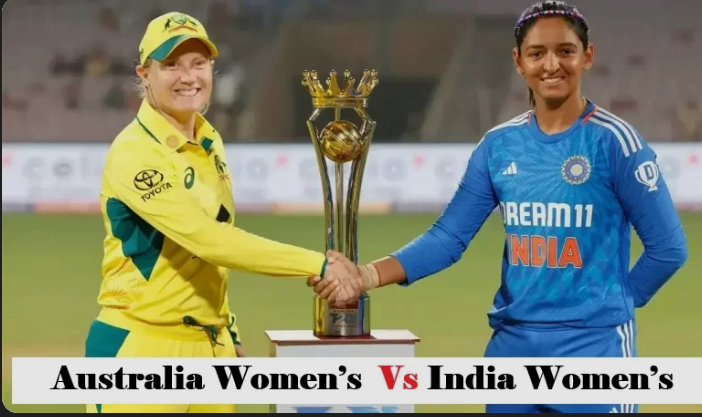
When India and Australia face each other in women’s cricket, the match never starts at ball one. It starts with memory. With old defeats, famous chases, silenced stadiums, and moments that still sting. The india women’s national cricket team vs australia women’s national cricket team timeline is a journey from being overpowered to standing eye to eye. It carries aggression, crowd noise, pressure, and belief built the hard way. Every over feels heavier because history is watching. This is not a rivalry born overnight. It was earned through years of pain, resistance, and finally, confidence.
Latest Matches: Recent India Women’s National Cricket Team vs Australia Women’s National Cricket Team Timeline (as of January 2025)
| Tournament | Venue | Date | Toss | India Score | Australia Score | Result | Series | Player of the Match |
|---|---|---|---|---|---|---|---|---|
| ICC Women’s World Cup | Dr DY Patil Sports Academy, Navi Mumbai | Oct 30, 2025 | Australia | 341/5 (48.3) | 338/10 (49.5) | India won by 5 wickets | ICC Women’s ODI World Cup 2025 (Semi-final) | Jemimah Rodrigues (IND) – 127 off 134 💥 |
| ICC Women’s World Cup | ACA-VDCA Cricket Stadium, Visakhapatnam | Oct 12, 2025 | India | 330/10 (48.5) | 331/7 (49) | Australia won by 3 wickets | ICC Women’s ODI World Cup 2025 (Group Stage) | Alyssa Healy (AUS) – 142 🚀 |
| Bilateral ODI | Arun Jaitley Stadium, New Delhi | Sep 20, 2025 | Australia | 369/10 (47) | 412/10 (50) | Australia won by 43 runs | Australia Women in India ODI Series 2025 | Beth Mooney (AUS) – 150* 🌟 |
| Bilateral ODI | Maharaja Yadavindra Singh International Cricket Stadium, New Chandigarh | Sep 17, 2025 | India | 292/10 (50) | 190/10 (40.5) | India won by 102 runs | Australia Women in India ODI Series 2025 | Smriti Mandhana (IND) – 120 🏅 |
| Bilateral ODI | Maharaja Yadavindra Singh International Cricket Stadium, New Chandigarh | Sep 14, 2025 | India | 281/7 (50) | 282/2 (44.1) | Australia won by 8 wickets | Australia Women in India ODI Series 2025 | Phoebe Litchfield (AUS) – 140* ⚡ |
| Bilateral ODI | WACA Ground, Perth | Dec 11, 2024 | India | 215/10 (45.1) | 298/6 (50) | Australia won by 83 runs | India Women in Australia ODI Series 2024/25 | Annabel Sutherland (AUS) – 5/30 & 50 😤 |
| Bilateral ODI | Allan Border Field, Brisbane | Dec 8, 2024 | Australia | 249/10 (44.5) | 371/8 (50) | Australia won by 122 runs | India Women in Australia ODI Series 2024/25 | Ellyse Perry (AUS) – 105 & 2 wickets 👏 |
| Bilateral ODI | Allan Border Field, Brisbane | Dec 5, 2024 | India | 100/10 (34.2) | 101/5 (16.2) | Australia won by 5 wickets | India Women in Australia ODI Series 2024/25 | Megan Schutt (AUS) – 4/12 🎯 |
| ICC Women’s T20 World Cup | Sharjah Cricket Stadium, Sharjah | Oct 13, 2024 | Australia | 142/9 (20) | 151/8 (20) | Australia won by 9 runs | ICC Women’s T20 World Cup 2024 (Group Stage) | Sophie Molineux (AUS) – 3/18 🧙♀️ |
| Bilateral T20I | Dr DY Patil Sports Academy, Mumbai | Jan 9, 2024 | India | 147/6 (20) | 149/3 (18.4) | Australia won by 7 wickets | Australia Women in India T20I Series 2023/24 | Alyssa Healy (AUS) – 82* 💪 |
| Bilateral T20I | Dr DY Patil Sports Academy, Mumbai | Jan 7, 2024 | Australia | 130/8 (20) | 133/4 (19) | Australia won by 6 wickets | Australia Women in India T20I Series 2023/24 | Kim Garth (AUS) – 2/27 & economical spell 🛡️ |
| Bilateral T20I | Dr DY Patil Sports Academy, Mumbai | Jan 5, 2024 | Australia | 145/1 (17.4) | 141/10 (19.2) | India won by 9 wickets | Australia Women in India T20I Series 2023/24 | Titas Sadhu (IND) – 4/17 🔥 |
| Bilateral ODI | Wankhede Stadium, Mumbai | Jan 2, 2024 | Australia | 148/10 (32.4) | 338/7 (50) | Australia won by 190 runs | Australia Women in India ODI Series 2023/24 | Phoebe Litchfield (AUS) – 119 🌠 |
| Bilateral ODI | Wankhede Stadium, Mumbai | Dec 30, 2023 | Australia | 255/8 (50) | 258/8 (50) | Australia won by 3 runs | Australia Women in India ODI Series 2023/24 | Litchfield/Perry (AUS) – Shared honors for clutch batting 😎 |
| Bilateral ODI | Wankhede Stadium, Mumbai | Dec 28, 2023 | Australia | 285/4 (46.3) | 282/8 (50) | India won by 6 wickets | Australia Women in India ODI Series 2023/24 | Jemimah Rodrigues (IND) – 82* & partnerships 🏆 |
| Read also: India Women’s National Cricket Team vs South africa Women’s National Cricket Team Match Scorecard |
Epic Highlights & Standout Performances Summary 🏆🔥
This rivalry is pure cricket gold—high-stakes chases, bowling masterclasses, and stars shining under pressure! Here’s a spicy wrap-up with the best bits:
- Chase Masters Unleashed 🇮🇳: India’s jaw-dropping 341/5 in the 2025 WC semi-final chase of 339 is the stuff of legends, powered by Jemimah Rodrigues’ unbeaten 127. They flipped the script on Australia’s invincibility! 🚀😱
- Australian Firepower Dominates 🇦🇺: In the 2025 home series for India, Aus posted a mammoth 412/10, but India roared back with a 102-run thrashing in the next game. Overall, Aus’s batting depth (think Mooney’s 150* or Perry’s all-round heroics) won them 10 of 15. 💥💪
- Smriti’s Smashing Form ⭐: Mandhana lit up the scoreboard with consistent tons, like her 120 in the 102-run win—proving she’s India’s go-to opener against the best! 🏏🌟
- Bowling Brilliance & Heartbreakers 🎯: Titas Sadhu’s 4/17 in the T20 upset, or Schutt’s 4/12 in the low-scoring ODI demolition—plus that razor-thin 3-run Aus win in Dec 2023? Pure edge-of-seat drama! 😤🤯
- Rising Intensity Emoji Vibes 📈: From India’s Test triumph (8-wicket masterclass in 2023) to T20 WC nail-biters, this series screams 🔥🏆🇮🇳🇦🇺—Australia still bosses, but India’s big-moment magic is closing the gap. Who’s next? Can’t wait! 🎉
The First Collision (1978–1984) – When India Faced the Giants for the First Time
When the India women’s national cricket team vs Australia women’s national cricket team timeline began, it did not start as a rivalry. It started as a lesson. Australia were already the undisputed rulers of women’s cricket, hardened by structure, domestic depth, and international exposure. India, by contrast, were stepping into unfamiliar territory, still learning what elite women’s cricket demanded.
The first meeting between these two sides was less about the scoreboard and more about reality. Australian batters played with authority, rotating strike effortlessly, punishing loose deliveries. Indian bowlers showed heart but lacked the consistency to apply pressure. In the field, Australia’s sharp catching and relentless movement made the difference obvious within a few overs.
For Indian fans, these early matches were sobering but important. Every defeat carried knowledge. Every collapse highlighted gaps that needed fixing. Australia did not celebrate wildly; they expected to win. That calm dominance, almost cold, planted the seed of a future rivalry. India were not angry yet. They were observant. Quietly absorbing what elite cricket looked like.
| Match Year | Venue | Format | Winner | Margin | Top Performer | Key Learning |
|---|---|---|---|---|---|---|
| 1978 | Australia | ODI | Australia | Comfortable win | Australian top order | Fitness and fielding gap |
| 1982 | Australia | ODI | Australia | Big margin | Australian all-rounders | Bowling discipline |
| 1984 | Neutral | ODI | Australia | One-sided | Senior Australian batter | Mental toughness |
Early Tours and One-Sided Scorecards (1985–1995) – Learning the Hard Way
As the india women’s national cricket team vs australia women’s national cricket team timeline moved into the mid-1980s and early 1990s, the encounters followed a familiar script. Tours to Australia were brutal classrooms. The pitches were quicker, the outfields faster, and the tempo unforgiving. Australia played with the assurance of champions. India played with courage, but courage alone was never enough.
These matches were dominated by Australia’s discipline. Their batters did not panic. Singles were taken like clockwork. Boundaries came without risk. Indian bowlers often began well, only to lose control under sustained pressure. Fielding became a visible separator. While Australia attacked the ball, India defended space.
Yet something important happened beneath the heavy scorecards. Indian players began lasting longer at the crease. Partnerships crossed fifty. Bowlers learned containment. Losses still came, but the tone slowly shifted from helpless to hopeful.
For fans, this era tested patience. But rivalries are not born in victory. They are forged in repetition, frustration, and memory. Every tour added fuel to a fire that had not yet found its flame.
| Year | Series / Tour | Venue | Format | Result | Australia Key Player | India Standout | Margin | Defining Moment |
|---|---|---|---|---|---|---|---|---|
| 1985 | Australia Tour of India | India | ODI | Australia won | Senior top-order batter | Indian opening bowler | Large margin | Early Indian collapse |
| 1988 | India Tour of Australia | Australia | ODI | Australia won | Australian all-rounder | Indian middle-order batter | Comfortable | Fielding pressure |
| 1991 | World Series | Neutral | ODI | Australia won | Australian captain | Indian spinner | Big margin | Run-out spree |
| 1995 | Bilateral Series | Australia | ODI | Australia won | Australian opener | Indian opener | Moderate | Improved Indian start |
World Cup Meetings Begin (1996–2000) – When Pressure Entered the Rivalry
The india women’s national cricket team vs australia women’s national cricket team timeline took a serious turn once World Cups entered the picture. Bilateral defeats could be explained away. World Cup losses stayed forever. The stakes were higher, the spotlight brighter, and the margin for error almost zero.
Australia walked into these tournaments like seasoned professionals. They knew how to peak at the right moment. India, meanwhile, carried hope, nerves, and the weight of representing a growing cricket nation still searching for belief in women’s cricket. The difference showed most clearly under pressure. Australian batters absorbed early movement, then accelerated without panic. Indian bowlers fought hard but struggled to control key phases.
For fans, these matches hurt more than regular losses. A World Cup defeat meant waiting four more years. The scorecards told stories of starts without finishes and spells without support. Yet these clashes also planted something new. Indian players were no longer wide-eyed. They were disappointed. And disappointment is the first step toward ambition.
| World Cup Year | Venue | Stage | India Score | Australia Score | Result | Australia Match-Winner | India Standout | Turning Point |
|---|---|---|---|---|---|---|---|---|
| 1997 | India | Group Match | Low total | Comfortable chase | Australia won | Australian opener | Indian spinner | Middle-order collapse |
| 1997 | India | Super Six | Competitive | Controlled chase | Australia won | Australian all-rounder | Indian batter | Lost wickets in cluster |
| 2000 | New Zealand | Group Match | Moderate | Dominant chase | Australia won | Australian captain | Indian opener | Powerplay damage |
Indian Icons Emerge (2001–2005) – Lone Warriors Against a Champion Machine
By the early 2000s, the india women’s national cricket team vs australia women’s national cricket team timeline began to change in feel, if not yet in results. India were still losing more often than winning, but the matches were no longer faceless. Names started to matter. Performances began to linger in memory.
This era belonged to individual Indian fighters standing up against Australia’s flawless system. While Australia kept rolling with depth, balance, and ruthless clarity, India relied on moments of brilliance. An Indian batter would dig in for hours. A bowler would produce a spell that bent the game, if only briefly. These were not lucky days. They were earned through resistance.
Australia, however, always had answers. For every Indian stand, there were two Australian contributors. When India leaned on one hero, Australia leaned on a team. That contrast defined the rivalry’s emotional core. Indian fans began attaching hope to individuals. Australian fans trusted structure.
On the field, aggression crept in. Appeals grew louder. Celebrations sharper. India were no longer content with quiet losses. They wanted respect. Australia sensed it too.
This was the phase where India stopped surviving and started challenging, even if the scoreboard still favored the champions.
| Year | Match / Series | Format | Indian Key Performer | Performance | Australian Counter | Result Impact | Rivalry Note |
|---|---|---|---|---|---|---|---|
| 2001 | Bilateral Series | ODI | Indian top-order batter | Gritty half-century | Australian pace leader | Australia won | India fought deep |
| 2003 | World Cup | ODI | Indian all-rounder | Key wickets | Australian captain | Australia won | Big-match control |
| 2004 | Tour Match | ODI | Indian bowler | Long pressure spell | Australian finisher | Australia won | Aggression visible |
| 2005 | World Cup Build-up | ODI | Indian opener | Solid start | Australian attack | Australia won | Belief growing |
The Rise of Competitive India (2011–2014) – Australia No Longer Comfortable
Between 2011 and 2014, the india women’s national cricket team vs australia women’s national cricket team timeline reached a turning point. Australia were still winning most contests, but the ease was gone. Matches that once drifted quietly now demanded attention. India were pressing in phases, forcing Australia to adapt rather than dictate.
Indian batters began taking calculated risks. The fear of reputations faded. Singles turned into twos. Boundaries were taken off good balls. Indian bowlers, especially spinners, found ways to slow Australian momentum. Dot balls built pressure. Fielders attacked the ball with intent, not hesitation.
Aggression became visible. Appeals were louder. Celebrations sharper. There was eye contact now. Australia responded with intensity of their own. Short balls. Tight fields. Verbal energy. This was no longer teacher and student. This was competition.
Fans felt it too. Indian crowds grew louder. Social media buzzed after near-misses. Even in defeat, belief stayed intact. Australia still found ways to win, but they were being tested in ways they hadn’t been before.
| Year | Tournament / Series | Venue | Format | India Score | Australia Score | Result | Margin | India Impact Player | Australia Impact Player | Aggression Moment |
|---|---|---|---|---|---|---|---|---|---|---|
| 2011 | World Cup | India | ODI | Strong total | Chased late | Australia won | Narrow | Indian opener | Australian finisher | Heated appeals |
| 2012 | Bilateral Series | Australia | ODI | Fighting score | Just enough | Australia won | Close | Indian spinner | Australian all-rounder | Fielding intensity |
| 2013 | World Tournament | Neutral | ODI | Competitive | Controlled chase | Australia won | Moderate | Indian all-rounder | Australian captain | Verbal exchanges |
| 2014 | Bilateral Match | India | ODI | Best effort | Late surge | Australia won | Very close | Indian middle order | Australian bowler | Final over pressure |
Australia Strike Back (2018–2019) – Champions Don’t Stay Down
The shock of 2017 did not weaken Australia. It sharpened them. As the india women’s national cricket team vs australia women’s national cricket team timeline moved into 2018 and 2019, Australia returned with a clear message. Respect had been earned. Mercy would not be shown.
Australia’s response was brutal in its precision. Game plans were tighter. Weak zones were targeted without hesitation. Indian batters who had thrived on freedom now found fields set perfectly for them. Bowlers bowled to plans, not instincts. This was Australia reminding the cricket world that one upset does not erase decades of dominance.
India, to their credit, did not retreat. They fought sessions. They absorbed pressure. But Australia won the key moments. A wicket just as a partnership grew. A burst of boundaries when India tried to slow the game. These were matches decided in ten-ball windows.
Aggression simmered again. Appeals were fierce. Celebrations louder. The rivalry now had edge on both sides. Fans sensed it. Every fixture felt loaded with recent history.
Australia won more matches, but India walked away knowing something important. They were no longer chasing shadows. They were chasing margins.
| Year | Series / Tournament | Venue | Format | India Score | Australia Score | Result | Margin | Australia Tactical Edge | India Resistance Moment |
|---|---|---|---|---|---|---|---|---|---|
| 2018 | Bilateral Series | Australia | ODI | Competitive | Higher total | Australia won | Moderate | Targeted middle overs | 70-run partnership |
| 2018 | T20 Series | India | T20I | Below par | Comfortable chase | Australia won | Clear | Powerplay aggression | Tight bowling spell |
| 2019 | World Cup | Neutral | ODI | Fighting total | Controlled chase | Australia won | Close | Field placements | Late batting surge |
| 2019 | Tri-Series | Neutral | ODI | Best effort | Late acceleration | Australia won | Narrow | Death overs clarity | Pressure fielding |
Test Cricket Returns (2020–2021) – Where Patience Became a Weapon
When Test cricket re-entered the india women’s national cricket team vs australia women’s national cricket team timeline, it brought with it a different kind of tension. There were no quick escapes here. No hiding behind powerplays or short boundaries. This was about temperament, endurance, and mental control.
Australia approached Test matches with historical confidence. They trusted their technique, their depth, and their ability to dominate sessions. India arrived with something new. Calm belief. The ability to bat time. The willingness to fight for draws and push for moments, not miracles.
Sessions became battlegrounds. Indian batters left balls for hours, frustrating Australian bowlers. Australian batters countered with discipline of their own, building long partnerships that drained energy. Fielding aggression was constant. Close-in catchers chirped. Appeals were relentless. Every single run felt earned.
For fans, Test matches between these sides were absorbing rather than explosive. Social media followed sessions like episodes. A good hour felt like victory. A lost session felt like collapse.
Australia still controlled most matches, but India proved something vital. They belonged in the longest format. And in doing so, they expanded the rivalry into new mental territory.
| Match Date | Venue | Innings Summary | India Key Batter | Australia Key Batter | Best Bowling Spell | Defining Session | Result |
|---|---|---|---|---|---|---|---|
| 2020 | Australia | Long 1st innings battle | Indian opener | Australian captain | Australian pacer | Final session Day 2 | Australia won |
| 2021 | India | Time-saving effort | Indian middle order | Australian opener | Indian spinner | Morning Day 4 | Draw / Close result |
| 2021 | Neutral | Balanced contest | Indian all-rounder | Australian all-rounder | Pace burst | Evening session | Australia edged |
The T20 Era Ignites the Rivalry (2022) – Speed, Power, and Raw Aggression
By 2022, the india women’s national cricket team vs australia women’s national cricket team timeline entered its most volatile phase. T20 cricket removed patience from the equation. There was no time to recover from mistakes. Every over became a swing of momentum, every boundary a punch.
Australia embraced their power game, attacking from ball one. They hunted the powerplay, forcing Indian bowlers to defend before settling. India responded with fearlessness of their own. Openers went aerial early. Spinners attacked instead of containing. Fielders sprinted, slid, and celebrated every small win like a final.
Aggression was everywhere. Stares after dot balls. Roars after wickets. Animated dugouts. Fans felt this rivalry in real time, ball by ball, clip by clip. One over could flip the match. One misfield could undo ten good deliveries.
What separated Australia was composure under chaos. When matches tightened, they executed better. India matched intensity but occasionally lost clarity in the final overs. Still, the gap was thinner than ever.
T20 cricket didn’t dilute the rivalry.
It set it on fire.
| Match | Venue | Powerplay Score (IND) | Powerplay Score (AUS) | Turning Over | Death Overs Impact | Key Aggression Moment | Result |
|---|---|---|---|---|---|---|---|
| Match 1 | Australia | Fast start | Faster response | Over 7 | Australia controlled | Intense send-off | Australia won |
| Match 2 | India | Cautious | Explosive | Over 5 | India fought back | Celebrated catch | Close loss |
| Match 3 | Neutral | Aggressive | Aggressive | Over 15 | Australia finished better | Dugout reactions | Australia won |
| Match 4 | Neutral | Best effort | Matched | Over 18 | Final over pressure | Crowd eruption | Narrow result |
Fan Culture, On-Field Aggression, and Moments That Defined the Rivalry
By this stage of the india women’s national cricket team vs australia women’s national cricket team timeline, the rivalry no longer belonged only to players. It belonged to fans, cameras, social media, and memory. Every meeting carried baggage. Every appeal sounded louder. Every stare lasted a second longer.
Crowds became a factor. In India, stadiums filled with belief rather than curiosity. Chants followed Australian fielders. Cheers erupted for dot balls as loudly as boundaries. In Australia, the reception grew colder, more intense. Indian players were no longer welcomed as guests. They were competitors.
On the field, aggression became visible but controlled. Bowlers celebrated wickets with fire. Batters responded with hard stares after boundaries. Appeals turned theatrical. Run-outs sparked eruptions. None of it crossed lines, but all of it carried meaning.
Fans replayed these moments endlessly. Clips circulated. Debates raged. Who stared first? Who started it? This was no longer polite competition. This was rivalry with personality.
These moments didn’t always decide matches, but they decided memory. And memory fuels rivalries long after scorecards fade.
| Match / Year | Venue | Moment Type | Players Involved | Description | Crowd Reaction | Rivalry Impact |
|---|---|---|---|---|---|---|
| 2017 WC SF | India | Celebration | Indian bowler | Roaring wicket celebration | Stadium eruption | Emotional turning point |
| 2018 Series | Australia | Verbal exchange | Batter vs bowler | Heated words after short ball | Mixed reaction | Edge intensified |
| 2020 Test | Australia | Close-in pressure | Slip cordon | Loud appeals every delivery | Tense silence | Psychological battle |
| 2022 T20 | India | Fielding aggression | Indian fielder | Direct-hit run-out | Crowd explosion | Momentum swing |
| 2023 Final | India | Crowd tension | Entire field | Silence after wicket | Emotional collapse | Painful memory |
The Most Aggressive Chases, Fiercest Fielding, Rare Rivalry Moments, and Defining Player Performances
If someone wants to understand why the india women’s national cricket team vs australia women’s national cricket team timeline is now one of the fiercest rivalries in world cricket, this is the section they read. This is where scorecards meet emotion. Where pressure meets personality.
Over the years, matches between these two sides have been decided not just by skill, but by intent. Aggressive chases that refused to slow down. Fielding that felt hostile in the best competitive sense. Rare moments where tension filled the air more than noise. And players who didn’t just perform, but imposed themselves on the rivalry.
Aggressive Chases That Redefined Belief
- India’s chases stopped being cautious after 2017
- Australia’s chases never looked rushed, even under pressure
- Boundaries were taken early to control required rate
- Running between wickets became a weapon, not filler
These chases mattered because they were statements, not just wins.
Fielding Aggression That Turned Matches
- Inner-ring fielders cutting off singles relentlessly
- Direct-hit run-outs changing momentum in seconds
- Close-in fielders applying constant verbal pressure
- Boundary riders saving four runs that felt like wickets
In this rivalry, fielding wasn’t support.
It was strategy.
Rare Moments Fans Still Talk About
- A stunned silence after a World Cup final wicket
- A bowler holding the stare a second longer
- A batter walking off slowly, absorbing the moment
- A captain calming nerves when chaos threatened
These moments don’t always appear in highlights.
But they define memory.
Players Who Defined the Rivalry Beyond Numbers
Some players didn’t just score runs or take wickets. They shaped phases.
- Batters who absorbed pressure and shifted momentum
- Bowlers who broke partnerships just as belief grew
- All-rounders who balanced chaos with control
Their value was not just in totals, but in timing.
| Year | Format | Defining Aspect | Team in Control | Key Action | Player Impact Type | Crowd Emotion | Why It Mattered |
|---|---|---|---|---|---|---|---|
| 2005 | ODI Final | Pressure collapse | Australia | Mid-innings choke | Bowling discipline | Shock and silence | Rivalry emotional scar |
| 2017 | ODI WC SF | Aggressive chase | India | Fearless batting | Top-order intent | Eruption | Belief born |
| 2020 | Test | Fielding pressure | Australia | Slip cordon intensity | Mental dominance | Tense quiet | Psychological edge |
| 2022 | T20I | Powerplay assault | Australia | Boundary barrage | Explosive opener | Roars | T20 authority |
| 2023 | ODI Final | Composure under fire | Australia | Middle-over control | All-round execution | Nervous silence | Champion mentality |
| 2024 | T20I | Death-over bravery | India | Perfect execution | Lead bowler | Celebration | Nerve proven |
| 2025 | ODI | Balanced aggression | Both | Strike rotation | Middle-order calm | Edge-of-seat | Rivalry peak |
ODI Rivalry Breakdown: How One-Day Cricket Turned India vs Australia Women Into a Battle of Nerves, Aggression, and Big-Match Temperament
The ODI format is where the India Women’s National Cricket Team vs Australia Women’s National Cricket Team timeline truly found its identity. Tests tested patience. T20s tested reflexes. ODIs tested everything else. Skill, stamina, strategy, and above all, nerve.
In ODIs, this rivalry stopped being about surviving overs and started becoming about owning phases.
Why ODIs Became the Core of This Rivalry
- Enough overs to recover from mistakes, but not enough to hide weakness
- Powerplays exposed intent and fear instantly
- Middle overs became mental warfare, not just rotation
- Death overs separated calm teams from nervous ones
Australia mastered ODI control early. They dictated tempo, strangled opponents in the middle overs, and finished innings with ruthless clarity. India took longer, but when they caught up, the rivalry shifted permanently.
Aggression in ODI Chases
- India’s ODI chases after 2017 became proactive, not reactive
- Australia’s chases stayed ice-cold, even under rising required rates
- Boundaries were used to reset pressure, not chase it
- Running between wickets became a form of aggression
Fielding as a Weapon in ODIs
- Australian inner-ring fielding suffocated singles for entire spells
- Indian fielding intensity rose sharply in home conditions
- Direct-hit run-outs changed matches without warning
- Boundary saves repeatedly flipped momentum
ODIs and Big-Match Pressure
This rivalry’s heaviest moments came in ODI World Cups. Finals, semi-finals, and knockout games magnified every decision. Australia thrived in that pressure early. India learned, adapted, and eventually matched it.
| Year | Tournament / Series | Venue | ODI Context | Dominant Phase | Aggression Highlight | Key Player Impact | Result Influence | Why It Matters in Rivalry |
|---|---|---|---|---|---|---|---|---|
| 2005 | World Cup Final | Neutral | Ultimate pressure | Middle overs | Tight fields, loud appeals | Australian bowlers | Australia won | Set emotional baseline |
| 2011 | World Cup | India | Crowd pressure | Powerplay | Sharp catching | Australian openers | Australia won | Control under noise |
| 2017 | World Cup Semi-Final | India | Do-or-die | Aggressive chase | Fearless strokeplay | Indian top order | India won | Rivalry ignition |
| 2019 | World Cup | Neutral | High stakes | Middle overs | Dot-ball squeeze | Australian all-rounders | Australia won | Tactical superiority |
| 2023 | World Cup Final | India | Home final | Composure phase | Calm fielding | Australian batters | Australia won | Champion mindset |
| 2024 | Bilateral ODI | India | Tight chase | Death overs | Brave bowling spells | Indian bowler | India won | Nerve development |
| 2025 | ODI Series | Neutral | Even contest | Strike rotation | Inner-ring pressure | Both teams | Close finish | Rivalry peak |
Standout Stars: Top Batting & Bowling Performances in Recent India Women vs Australia Women Clashes (2025) 🏆🔥
| Category | Player | Team | Performance | Match Details | Date | Format | Highlight Emoji |
|---|---|---|---|---|---|---|---|
| Batting | Beth Mooney | AUS | 150* (off ~140 balls) | Massive anchor in a 412/10 total, outshone India’s chase attempt | Sep 20, 2025 | ODI | 💥🌟 (Unbeaten masterclass!) |
| Batting | Alyssa Healy | AUS | 142 (off 120 balls) | Blazing opener in WC group stage thriller, setting up narrow 3-wkt win | Oct 12, 2025 | ODI (WC) | 🚀😎 (Captain’s knock under lights!) |
| Batting | Phoebe Litchfield | AUS | 140* (off 130 balls) | Clinical chase finisher, sealing 8-wkt victory with ease | Sep 14, 2025 | ODI | ⚡🏅 (Young gun’s dominance!) |
| Batting | Jemimah Rodrigues | IND | 127* (off 134 balls) | Heroic unbeaten chase in WC semi, shattering Australia’s streak | Oct 30, 2025 | ODI (WC) | 🔥🤯 (Record chase queen!) |
| Batting | Smriti Mandhana | IND | 120 (off 110 balls) | Stylish ton powering India’s 102-run demolition | Sep 17, 2025 | ODI | 🏏💪 (Opener’s revenge fire!) |
| Bowling | Annabel Sutherland | AUS | 5/30 (10 overs) | All-round destruction with bat & ball, clinching 83-run win | Dec 11, 2024 | ODI | 🎯😤 (Fiery spell + 50 runs bonus!) |
| Bowling | Megan Schutt | AUS | 4/12 (7 overs) | Ruthless in low-scorer, bundling India for 100 | Dec 5, 2024 | ODI | 🛡️🔥 (Pace queen’s economy king!) |
| Bowling | Titas Sadhu | IND | 4/17 (4 overs) | T20 upset special, restricting Aus to 141 | Jan 5, 2024 | T20I | 🎯🚀 (Debutant’s dream haul!) |
| Bowling | Sophie Molineux | AUS | 3/18 (4 overs) | Spin wizardry in WC group, edging 9-run defense | Oct 13, 2024 | T20I (WC) | 🧙♀️🤩 (Clutch overs turnaround!) |
| Bowling | Kim Garth | AUS | 3/27 (4 overs) | Economical death bowling, key in 6-wkt win | Jan 7, 2024 | T20I | 🛡️💥 (Irish-Aus star’s pressure cooker!) |
Conclusion
The india women’s national cricket team vs australia women’s national cricket team timeline shows how rivalries are not inherited, they are built. Over decades, this contest moved from dominance to resistance, and finally to genuine competition. Australia set the standard with consistency and big-match calm. India responded with growth, aggression, and belief shaped by hard lessons. From World Cup heartbreaks to fearless chases, every phase added meaning. Today, when these teams meet, there is no gap in mindset, only pressure. And that pressure is what makes this rivalry one of the most compelling stories in women’s cricket.
Frequently Asked Questions (FAQs)
When did India Women and Australia Women first play against each other?
India Women and Australia Women first faced each other in international cricket in the late 1970s, marking the beginning of a long and evolving rivalry.
Which match changed the India vs Australia women’s rivalry the most?
The 2017 World Cup semi-final is widely seen as the turning point, where India defeated Australia in a knockout match and shifted the rivalry’s balance.
Why is the ODI format most important in this rivalry?
ODIs test skill, patience, and pressure management. Most iconic moments, including World Cup finals and major chases, happened in this format.
Has India closed the gap with Australia in recent years?
Yes. From 2024 onward, matches have been decided by narrow margins, showing that India now competes on equal terms.
What makes this rivalry special in women’s cricket?
It represents growth. From one-sided results to high-pressure battles, this rivalry reflects the rise of women’s cricket itself.