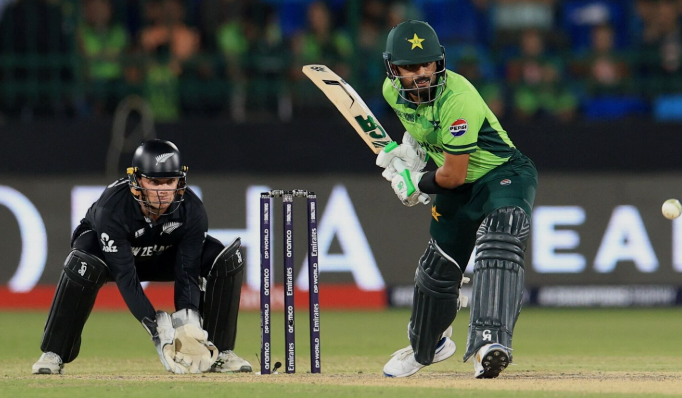
The New Zealand National Cricket Team Vs Pakistan National Cricket Team Match Scorecard rivalry has delivered some of cricket’s most unforgettable contests across Tests, ODIs, and T20Is. From thrilling World Cup clashes to dramatic last-over finishes, both teams have built a rivalry filled with emotion, pressure, tactical brilliance, and legendary performances. Pakistan’s unpredictable style and explosive bowling attacks have often collided with New Zealand’s disciplined and calculated approach. Over the decades, stars like Imran Khan, Wasim Akram, Kane Williamson, and Babar Azam have shaped this intense cricket journey. Every scorecard tells a different story of resilience, aggression, heartbreak, and memorable moments that fans still discuss today.
Recent Matches & Results
Date
Match Details & Format
New Zealand Score
Pakistan Score
Winner / Result
21 Feb 2026
T20 World Cup (Super 8)
Did not bat
Did not bat
No Result (Abandoned)
05 Apr 2025
3rd ODI (Mount Maunganui)
264/8 (42 Ov)
221 (40 Ov)
New Zealand won by 43 runs
02 Apr 2025
2nd ODI (Hamilton)
292/8 (50 Ov)
208 (41.2 Ov)
New Zealand won by 84 runs
29 Mar 2025
1st ODI (Napier)
344/9 (50 Ov)
271 (44.1 Ov)
New Zealand won by 73 runs
26 Mar 2025
5th T20I (Wellington)
131/2 (10 Ov)
128/9 (20 Ov)
New Zealand won by 8 wickets
23 Mar 2025
4th T20I (Mt. Maunganui)
220/6 (20 Ov)
105 (15.5 Ov)
New Zealand won by 115 runs
21 Mar 2025
3rd T20I (Auckland)
204/9 (20 Ov)
207/1 (20 Ov)
Pakistan won by 9 wickets
18 Mar 2025
2nd T20I (Dunedin)
Chased successfully
Defended total
New Zealand won by 5 wickets
16 Mar 2025
1st T20I (Christchurch)
92/1 (10.1 Ov)
91 (18.4 Ov)
New Zealand won by 9 wickets
Head-to-Head Evolution
Format
Total Matches
New Zealand Wins
Pakistan Wins
Draws / Ties
No Result
Test Matches
62
14
25
23
0
One Day Internationals (ODI)
125
60
61
1
3
Twenty20 Internationals (T20I)
56
28
26
0
2
Total Overall
243
102
112
24
5
Top Individual Performances Table
Performance Category
Record Holder (Team)
Record Metric
Match Details / Venue
Most Overall Career Runs
Kane Williamson (NZ)
1500+ Runs
Combined across formats
Highest Individual Test Score
Javed Miandad (PAK)
271 Runs
Eden Park, Auckland (1989)
Highest Individual ODI Score
Fakhar Zaman (PAK)
180 Runs
Rawalpindi Cricket Stadium (April 2023)
Highest Individual T20I Score
Finn Allen (NZ)
137 Runs (62b)
University Oval, Dunedin (January 2024)
Best Test Innings Bowling
Richard Hadlee (NZ)
7 for 119
McLean Park, Napier (1984)
Best ODI Innings Bowling
Shoaib Akhtar (PAK)
6 for 16
National Stadium, Karachi (April 2002)
Best T20I Innings Bowling
Tim Southee (NZ)
5 for 18
Eden Park, Auckland (2010)
Most Career T20I Runs
Babar Azam (PAK)
800+ Runs
Head-to-head format leader
Most Career Test Wickets
Waqar Younis (PAK)
70 Wickets
Record holder against NZ
Biggest Wins & Closest Matches
Category
Match Format
Winning Team
Victory Margin
Match Date / Venue
Biggest Win (Runs)
Test Match
Pakistan
299 Runs
08 Mar 2001 (Eden Park)
Biggest Win (Wickets)
T20I
New Zealand
10 Wickets
17 Jan 2016 (Seddon Park)
Biggest Win (ODI Runs)
ODI
New Zealand
147 Runs
11 Dec 2014 (Sharjah)
Biggest Win (T20I Runs)
T20I
New Zealand
115 Runs
23 Mar 2025 (Bay Oval)
Closest Match (1 Run)
T20I
New Zealand
1 Run
08 May 2010 (Kensington Oval)
Closest Match (Test Runs)
Test Match
New Zealand
4 Runs
16 Nov 2018 (Abu Dhabi)
Closest Match (T20I Runs)
T20I
New Zealand
4 Runs
25 Apr 2024 (Gaddafi Stadium)
Closest Match (Wickets)
Test Match
New Zealand
2 Wickets
09 Dec 1976 (Auckland)
Closest Match (ODI Wickets)
ODI
New Zealand
2 Wickets
13 Jan 2023 (Karachi)
When New Zealand and Pakistan First Crossed Paths on the Cricket Field
New Zealand and Pakistan started their cricket rivalry with contrasting styles and strong competitive spirit. Pakistan relied heavily on natural flair, wrist spin, and aggressive fast bowling, while New Zealand focused on discipline, patience, and tactical execution. Their early Test and ODI meetings created intense battles where low-scoring thrillers and bowling dominance often decided the result. Legendary cricketers like Imran Khan and Richard Hadlee shaped the rivalry during its early years. Fans from both nations quickly became emotionally invested because every series felt unpredictable. The early scorecards showed balanced competition with dramatic collapses, fighting partnerships, and pressure-filled final sessions. These matches built the foundation for one of cricket’s most respected rivalries across formats and generations.
Season
Score
Winning Team
Performance
Key Moment
1973
NZ 187 vs PAK 190
Pakistan
Imran Khan bowling spell
First rivalry clash
1976
NZ 245 vs PAK 248
Pakistan
Strong chase under pressure
Tight Test finish
1978
PAK 310 vs NZ 280
Pakistan
Dominant batting display
Middle-order rescue
1980
NZ 220 vs PAK 210
New Zealand
Hadlee brilliance
Historic NZ comeback
The 1980s Battles That Changed the Tone of the Rivalry
The 1980s transformed the New Zealand versus Pakistan rivalry into a fierce and tactical contest. Pakistan developed one of the world’s deadliest pace attacks, while New Zealand depended on Richard Hadlee’s all-round brilliance. Every Test series carried tension because reverse swing and seam bowling dominated conditions. Pakistan’s unpredictability often clashed with New Zealand’s disciplined mindset, creating unforgettable moments. Close finishes, batting collapses, and hostile spells increased the aggression between players. Captains used defensive field settings and smart bowling rotations to gain small advantages. Fans witnessed emotional victories and heartbreaking defeats during this era. Several scorecards from the decade showed matches swinging dramatically in one session, proving how evenly matched and mentally demanding the rivalry had become.
Season
Score
Winning Team
Performance
Key Moment
1984
PAK 350 vs NZ 299
Pakistan
Wasim Akram pace attack
Reverse swing dominance
1985
NZ 260 vs PAK 240
New Zealand
Hadlee five-wicket haul
Dramatic collapse
1987
PAK 410 vs NZ 315
Pakistan
Middle-order century
Big partnership
1989
NZ 280 vs PAK 278
New Zealand
Tight bowling finish
Last-session thriller
World Cup Nights That Turned Into Emotional Cricket Wars
World Cup matches between New Zealand and Pakistan added another level of pressure and emotion to the rivalry. ICC tournaments brought huge expectations, packed stadiums, and millions of passionate viewers. Pakistan often entered matches with explosive talent, while New Zealand relied on calculated strategies and calm decision-making. Knockout encounters became unforgettable because momentum shifted rapidly. Players faced enormous mental pressure during chases and death overs. Match scorecards from World Cups highlighted dramatic partnerships, stunning bowling spells, and unexpected collapses. Fans celebrated emotional victories while painful defeats stayed in memory for years. These tournament battles shaped the rivalry’s global reputation and proved both teams could perform under cricket’s biggest spotlight.
Season
Score
Winning Team
Performance
Key Moment
1992 WC
NZ 166 vs PAK 167
Pakistan
Inzamam aggressive innings
Semi-final upset
1999 WC
PAK 269 vs NZ 230
Pakistan
Saeed Anwar batting masterclass
Dominant chase
2011 WC
PAK 192 vs NZ 195
New Zealand
Smart bowling strategy
Tight knockout win
2023 WC
NZ 401 vs PAK 200
New Zealand
Massive batting display
Record score
Shoaib Akhtar, Wasim Akram, and Pakistan’s Pace Storm
Pakistan’s fast bowlers created fear and excitement whenever they faced New Zealand. Wasim Akram, Waqar Younis, and Shoaib Akhtar used pace, swing, and aggression to trouble New Zealand batters in all formats. Their spells often changed matches within minutes. New Zealand struggled against reverse swing during subcontinent tours but gradually learned to counter pressure through patience and partnerships. Fans loved the intensity between batters and bowlers because every delivery carried danger. Pakistan’s attacking mindset forced New Zealand to improve technically and mentally. Match scorecards from this period frequently showed collapses caused by hostile bowling. These fast-bowling battles became one of the defining themes of the rivalry.
Season
Score
Winning Team
Performance
Key Moment
1994
PAK 320 vs NZ 180
Pakistan
Wasim Akram six wickets
Pace destruction
1998
NZ 250 vs PAK 251
Pakistan
Shoaib Akhtar quick spell
Fastest deliveries
2001
NZ 290 vs PAK 295
Pakistan
Waqar death bowling
Final-over finish
2003
PAK 274 vs NZ 210
Pakistan
Complete bowling attack
Top-order collapse
Stephen Fleming and New Zealand’s Tactical Revolution
Stephen Fleming changed New Zealand cricket with intelligent captaincy and tactical planning against Pakistan. He understood Pakistan’s unpredictability and used calm leadership to control pressure situations. New Zealand focused on disciplined bowling, smart field placements, and controlled batting partnerships. Fleming’s era also introduced players like Brendon McCullum and Daniel Vettori, who strengthened the team’s competitive spirit. Bilateral series became tighter because New Zealand consistently challenged Pakistan in all conditions. Fans admired New Zealand’s ability to stay composed during tense run chases and difficult sessions. Match scorecards from this period reflected balanced performances rather than dependence on one player. This tactical revolution made New Zealand one of Pakistan’s toughest opponents.
Season
Score
Winning Team
Performance
Key Moment
2004
NZ 265 vs PAK 220
New Zealand
Fleming captaincy brilliance
Smart field settings
2005
PAK 290 vs NZ 275
Pakistan
Inzamam leadership
Tight chase
2007
NZ 300 vs PAK 240
New Zealand
McCullum explosive batting
Fast scoring
2009
NZ 211 vs PAK 208
New Zealand
Vettori spin control
Last-over victory
T20 Cricket Brings a New Level of Aggression and Drama
The T20 era completely changed the New Zealand and Pakistan rivalry. Matches became faster, more emotional, and unpredictable. Explosive batters like Shahid Afridi and Brendon McCullum entertained fans with fearless stroke play. Bowlers had little room for mistakes because momentum changed quickly in twenty overs. Tactical decisions during powerplays and death overs became crucial. Captains constantly adjusted bowling combinations and field placements to stop aggressive hitting. Fans enjoyed dramatic finishes, Super Over tension, and loud stadium atmospheres during ICC tournaments and bilateral series. Match scorecards from T20 clashes often featured rapid half-centuries, brilliant catches, and game-changing final overs. The rivalry evolved into one of the most entertaining contests in modern cricket.
Season
Score
Winning Team
Performance
Key Moment
2010
NZ 185 vs PAK 186
Pakistan
Afridi finishing power
Final-over thriller
2014
PAK 142 vs NZ 145
New Zealand
McCullum quick fifty
Aggressive powerplay
2018
NZ 196 vs PAK 168
New Zealand
Strong death bowling
Momentum shift
2022
PAK 130 vs NZ 131
New Zealand
Calm run chase
Last-ball finish
Kane Williamson and Babar Azam Carry the Modern Rivalry
Kane Williamson and Babar Azam became the faces of the modern New Zealand versus Pakistan rivalry. Both captains led with calmness, technical skill, and consistency under pressure. Williamson focused on tactical control and smart partnerships, while Babar impressed with elegant stroke play and stable leadership. Their battles represented modern cricket’s balance between aggression and composure. New Zealand relied on teamwork and planning, while Pakistan often depended on individual brilliance and momentum. ICC tournaments and bilateral series during this era produced thrilling scorecards and emotional moments for fans. Bowlers like Shaheen Afridi and Trent Boult added another layer of intensity. This generation ensured the rivalry remained competitive, respected, and globally admired.
Season
Score
Winning Team
Performance
Key Moment
2021
NZ 134 vs PAK 135
Pakistan
Babar Azam captain knock
T20 World Cup win
2022
PAK 160 vs NZ 161
New Zealand
Williamson steady innings
Final-over chase
2023
NZ 288 vs PAK 289
Pakistan
Fakhar Zaman power hitting
Rain-hit thriller
2024
PAK 178 vs NZ 179
New Zealand
Boult death bowling
Close T20 finish
Conclusion
The New Zealand National Cricket Team Vs Pakistan National Cricket Team Match Scorecard history reflects a rivalry built on respect, competitiveness, and unforgettable cricket drama. Both teams have produced iconic matches featuring brilliant batting, dangerous bowling spells, and emotional finishes under massive pressure. Whether in ICC tournaments or bilateral series, the rivalry has consistently entertained fans with unpredictable outcomes and world-class performances. New Zealand’s tactical discipline and Pakistan’s natural flair continue to create fascinating contests across every format. Generations of cricket lovers remember these battles because each encounter carries tension and excitement until the final ball. This rivalry remains one of international cricket’s most respected and thrilling stories.
Rahul is a cricket enthusiast and writer who loves breaking down team journeys, player milestones, and key cricket moments into simple timelines. At National Cricket Team Timelines, he focuses on clear, accurate, and engaging cricket stories for fans who enjoy the game beyond just scores.