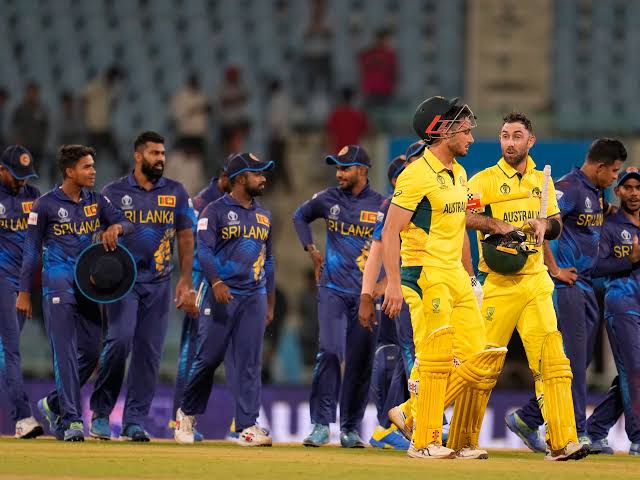
The Australia National Cricket Team Vs Sri Lanka National Cricket Team Standings provide a useful comparison of two experienced international sides and their performances in major cricket tournaments. Australia bring a long history of success across formats, while Sri Lanka remain a highly competitive team with a strong record in limited-overs cricket. Their 2026 T20 World Cup meeting was particularly important, with Sri Lanka defeating Australia by eight wickets.In the 2026 Men’s T20 World Cup Group B standings, Sri Lanka finished the group stage with 6 points from four matches, while Australia recorded 4 points from four matches. Sri Lanka’s stronger position was built around three victories, including the important win over Australia.
ICC World Test Championship Standings (2025-2027)
| Position | Team | Points Percentage (PCT %) | Points | Won | Lost | Drawn |
|---|---|---|---|---|---|---|
| 1 | Australia | 87.50% | 84 | 7 | 1 | 0 |
| 2 | South Africa | 75.00% | 36 | 3 | 1 | 0 |
| 3 | New Zealand | 72.22% | 52 | 4 | 1 | 1 |
| 4 | Bangladesh | 58.33% | 28 | 2 | 1 | 1 |
| 5 | India | 48.15% | 52 | 4 | 4 | 1 |
| 6 | Sri Lanka | 41.67% | 20 | 1 | 1 | 2 |
| 7 | England | 24.36% | 38 | 4 | 8 | 1 |
| 8 | West Indies | 22.73% | 30 | 2 | 7 | 2 |
| 9 | Pakistan | 6.67% | 4 | 1 | 4 | 0 |
ICC Men’s ODI Team Standings
| Rank | Team | Matches | Points | Rating |
|---|---|---|---|---|
| 1 | India | 33 | 3841 | 116 |
| 2 | New Zealand | 35 | 3809 | 109 |
| 3 | Australia | 29 | 2965 | 102 |
| 4 | South Africa | 28 | 2855 | 102 |
| 5 | Pakistan | 32 | 3215 | 100 |
| 6 | Sri Lanka | 36 | 3470 | 96 |
| 7 | England | 31 | 2898 | 93 |
| 8 | Afghanistan | 24 | 2154 | 90 |
| 9 | Bangladesh | 39 | 3251 | 83 |
| 10 | West Indies | 34 | 2624 | 77 |
Recent Head-to-Head Series and Match Trackers
- T20 World Cup 2026: Sri Lanka defeated Australia by 8 wickets during their Group B clash in February 2026 at Balagolla.
- Bilateral Series (Feb 2025): Sri Lanka hosted Australia, winning the ODI series 2-0, while Australia won the Test leg 2-0.
All-Time Head-to-Head Records
| Format | Total Matches | Australia Won | Sri Lanka Won | Tied or Draw or No Result |
|---|---|---|---|---|
| Test Matches | 35 | 22 | 5 | 8 |
| One Day Internationals (ODIs) | 106 | 64 | 38 | 4 |
| Twenty20 Internationals (T20Is) | 27 | 16 | 11 | 0 |
Most Recent Tournament Encounter: ICC Men’s T20 World Cup 2026
The teams faced each other in the group stage of the T20 World Cup in February 2026, where Sri Lanka won convincingly by 8 wickets.
Highest Run Scorers
| Player | Team | Runs Scored | Balls Faced | Strike Rate |
|---|---|---|---|---|
| Pathum Nissanka | Sri Lanka | 100 not out | 52 | 192.30 |
| Travis Head | Australia | 56 | 29 | 193.10 |
| Mitchell Marsh | Australia | 54 | 27 | 200.00 |
| Kusal Mendis | Sri Lanka | 51 not out | 38 | 134.21 |
| Pavan Rathnayake | Sri Lanka | 28 not out | 15 | 186.66 |
Match Lineups
- Sri Lanka Playing XI: Pathum Nissanka, Kusal Mendis, Kamindu Mendis, Pavan Rathnayake, Charith Asalanka, Bhanuka Rajapaksa, Wanindu Hasaranga, Dunith Wellalage, Maheesh Theekshana, Dushmantha Chameera, Dushan Hemantha.
- Australia Playing XI: Travis Head, Mitchell Marsh, Cameron Green, Tim David, Josh Inglis, Glenn Maxwell, Marcus Stoinis, Cooper Connolly, Xavier Bartlett, Nathan Ellis, Adam Zampa.
When Island Ambition Met Australian Steel
Before Sri Lanka earned official Test status, the tropical island served as a critical geographic pitstop for Australian teams traveling by ship to England. These brief stopover games, often called whistle-stop matches, dates back to 1884. The legendary Sir Donald Bradman famously played on the island in 1930 and 1948, drawing massive local crowds who gathered just to catch a glimpse of his flawless technique.
These early exhibitions instilled a deep cricketing ambition within the islanders. The local players were exposed firsthand to the clinical, unyielding, and hardened style of Australian steel. This foundational era created a blueprint for generations of local cricketers who sought to bridge the immense gap between unofficial status and world-class competitiveness.
The Hard Road to Recognition
For decades, Sri Lanka fought an uphill battle against global skepticism to prove they belonged in top-tier international cricket. Their true baptism by fire arrived at the inaugural 1975 Prudential World Cup at The Oval, where they faced a terrifyingly fast Australian pace attack.
Despite suffering painful physical blows from short-pitched bowling, the amateur Sri Lankan batsmen stood their ground with immense courage. This valiant effort earned the respect of the global cricket community and accelerated their journey toward gaining full ICC Test status in 1981.
| Match Event | Details and Historic Significance |
|---|---|
| Tournament and Venue | 1975 ICC World Cup, Played at The Oval in London |
| The Historic Conflict | Unofficial Sri Lankan team facing Australia’s legendary pace battery |
| Australian Fast Bowlers | Jeff Thomson and Dennis Lillee bowling at extreme, hostile speeds |
| Sri Lankan Resilience | Dulip Mendis and Sunil Wettimuny scored brave half-centuries |
| Physical Toll | Both Mendis and Wettimuny were hospitalized after being struck by Thomson |
| Match Outcome | Australia won by 52 runs, but Sri Lanka proved their world-class potential |
Sparks That Lit the Fire
The relationship between the two nations turned from friendly to fiercely adversarial during Sri Lanka’s 1995-1996 tour of Australia. The definitive flashpoint occurred during the iconic Boxing Day Test at the Melbourne Cricket Ground, when Australian umpire Darrell Hair repeatedly called Sri Lankan spin wizard Muttiah Muralitharan for a suspect bowling action.
The public humiliation of their premier bowler deeply wounded the Sri Lankan team. The tour deteriorated further with heated press conferences, icy handshakes, and accusations of ball-tampering and sledging. This highly volatile tour transformed a standard sporting matchup into a deeply personal, emotionally charged battle for national respect and validation.
The Night the Underdogs Ruled
The boiling tension from the 1995-1996 controversies reached a spectacular climax on March 17, 1996, at the Wills World Cup Final in Lahore, Pakistan. Led by the fiercely defiant Arjuna Ranatunga, Sri Lanka played with brilliant tactical aggression to completely dismantle a dominant, star-studded Australian team that had won the previous tournament.
| Final Match Component | Statistical Data and Match Highlights |
|---|---|
| Australia Innings | 241 for 7 in 50 overs |
| Sri Lanka Innings | 245 for 2 in 46.2 overs |
| Player of the Match | Aravinda de Silva (107 not out and 3 wickets for 42 runs) |
| Sri Lankan Captain | Arjuna Ranatunga (47 not out, hitting the winning runs) |
| Australian Captain | Mark Taylor (74 runs scored) |
| Match Result | Sri Lanka won by 8 wickets to claim their first World Cup trophy |
First Blood in the Five-Day Arena
Conquering the grueling five-day format against Australia proved to be a far steeper hill to climb than one-day cricket. It took Sri Lanka nearly two decades after gaining Test status to finally break their structural drought against the Australians in the longest format of the game.
| Test Match Milestone | Official Match Details |
|---|---|
| Timeline and Venue | September 1999 at the Asgiriya Stadium in Kandy, Sri Lanka |
| Sri Lankan Captain | Sanath Jayasuriya |
| Australian Captain | Steve Waugh |
| Heroic Bowling Display | Muttiah Muralitharan took a match-winning 5 wickets for 71 runs |
| Historic Result | Sri Lanka won by 6 wickets, recording their first-ever Test win over Australia |
| Series Consequence | Sri Lanka went on to secure a historic 1-0 Test series victory |
Legends Locked in Battle
As both teams entered the 2000s, the rivalry was defined by iconic individual matchups that captivated cricket fans worldwide. It was an era where masterful subcontinental batting ran into clinical Australian bowling, and iconic Australian batsmen faced the ultimate trial by spin.
The elegant, wristy strokeplay of Aravinda de Silva, Kumar Sangakkara, and Mahela Jayawardene regularly went toe-to-toe with the tactical genius of Ricky Ponting, Steve Waugh, and Matthew Hayden. Simultaneously, a historic parallel battle for global bowling supremacy emerged. Australia’s leg-spin king Shane Warne and Sri Lanka’s off-spin wizard Muttiah Muralitharan constantly traded the world record for the highest number of Test wickets, elevating the art of spin bowling to unprecedented heights.
The Whitewash That Shocked the Rankings
In the winter of 2016, an unfancied and transitioning Sri Lankan team achieved one of the greatest modern upsets in Test cricket history. They secured a comprehensive clean sweep against a top-ranked Australian side that had arrived in the subcontinent as heavy favorites.
| Test Match | Venue | Match Result | Leading Performer |
|---|---|---|---|
| First Test | Pallekele Cricket Stadium | Sri Lanka won by 106 runs | Kusal Mendis (176 runs) |
| Second Test | Galle International Stadium | Sri Lanka won by 229 runs | Dilruwan Perera (6 wickets for 70 runs) |
| Third Test | SSC Ground, Colombo | Sri Lanka won by 163 runs | Rangana Herath (7 wickets for 64 runs) |
| Series Result | Sri Lanka wins 3-0 | First whitewash over Australia | Rangana Herath (28 wickets total) |
Modern Clashes and Shifting Balance Fan Fury, Player Rivalries and Enduring Pressure
Modern encounters between these two nations have transformed into highly unpredictable, high-octane battles across all three international formats. The tactical balance regularly shifts based on the playing conditions. Australia relies on their traditional strengths of aggressive, high-velocity pace bowling and explosive top-order batting. Sri Lanka counters this by deploying mystery spin variations, slow left-arm orthodoxy, and dynamic batsmen who use the sweep shot to perfection. This direct contrast in styles keeps their matches fiercely competitive, as seen in their dramatic group-stage clashes at recent T20 and ODI World Cups.
The complex history between these sides ensures that every single match is played under immense emotional and mental pressure. When Australia tours the island, they face a wall of sound from passionate local crowds in Colombo, Kandy, and Galle who treat these games as crucial battles for national pride. Conversely, when Sri Lanka travels down under, massive and vibrant pockets of the Sri Lankan diaspora fill venues like the Melbourne Cricket Ground and the Sydney Cricket Ground.
This incredible fan presence turns overseas matches into home-away-from-home fixtures for the island nation. Because the historical memories of past umpiring controversies, fiery player altercations, and dramatic World Cup finals run deep, every run scored, wicket taken, and close decision remains under intense fan scrutiny.
Final Thoughts
The Australia National Cricket Team Vs Sri Lanka National Cricket Team Standings show how important consistency is during a major tournament. Australia have traditionally relied on depth, experience and strong performances under pressure, while Sri Lanka can challenge leading teams through aggressive batting, quality spin and disciplined bowling. Their recent T20 World Cup encounter highlighted the competitive nature of this matchup, with Sri Lanka producing a convincing eight-wicket victory. Comparing points, wins, losses and net run rate gives fans a clearer understanding of how each team performed and where the balance of competition stood.
FAQs
1. Which team had more points in the 2026 T20 World Cup Group B?
Sri Lanka finished with 6 points, while Australia had 4 points after the group stage.
2. Who won the Australia vs Sri Lanka T20 World Cup match?
Sri Lanka defeated Australia by eight wickets, chasing 182 with two wickets down.
3. What statistics are included in cricket standings?
Standings generally include matches played, wins, losses, points and net run rate.
4. Why is net run rate important?
Net run rate can determine the ranking of teams that finish level on points, making scoring margins important in tournament cricket.
5. Where can fans check updated cricket standings?
Official tournament websites and major cricket platforms provide updated points tables, rankings, results and team statistics.