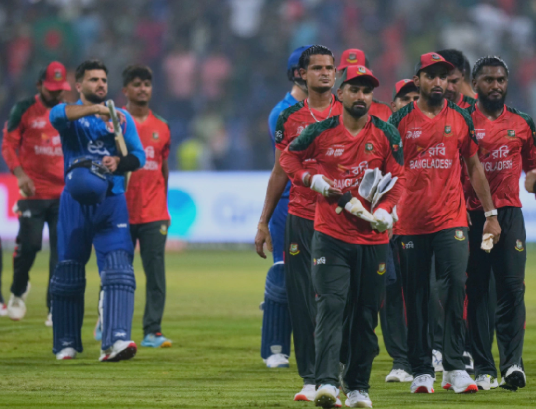
The Bangladesh National Cricket Team vs Afghanistan National Cricket Team standings rivalry has become one of the most exciting contests in modern Asian cricket. What started as a battle between an experienced Test nation and a rising associate side quickly turned into a fierce competition filled with pressure moments, emotional celebrations, and unforgettable scorecards. Bangladesh relied on experienced stars and home dominance, while Afghanistan brought fearless cricket and world-class spin bowling. Every ODI, T20I, and World Cup clash added new drama to the rivalry. From Rashid Khan’s magical spells to Shakib Al Hasan’s all round brilliance, these matches have consistently delivered thrilling moments for cricket fans around the world.
Overall Head-to-Head Record (All Formats)
Format
Total Matches
Bangladesh Wins
Afghanistan Wins
ODI
23
11
12
T20I
16
10
6
Test Matches
2
1
1
Total Combined
41
22
19
Recent Match Results
Date
Format
Venue
Winner
Score Summary
14 Oct 2025
ODI
Abu Dhabi
Afghanistan
AFG 293 for 9 vs BAN 93
11 Oct 2025
ODI
Abu Dhabi
Afghanistan
AFG 190 vs BAN 109
08 Oct 2025
ODI
Abu Dhabi
Afghanistan
BAN 221 vs AFG 226 for 5
05 Oct 2025
T20I
Sharjah
Bangladesh
AFG 143 for 9 vs BAN 144 for 4
03 Oct 2025
T20I
Sharjah
Bangladesh
AFG 147 for 5 vs BAN 150 for 8
02 Oct 2025
T20I
Sharjah
Bangladesh
AFG 143 for 8 vs BAN 144 for 6
16 Sep 2025
T20I
Abu Dhabi
Bangladesh
BAN 154 for 5 vs AFG 146 for 7
Top Individual and Team Performances
Performance Category
Record Holder
Team
Statistic Details
Most Career Runs
Rahmanullah Gurbaz
AFG
687 runs
Highest Individual Score
Rahmanullah Gurbaz
AFG
145 runs
Most Career Wickets
Rashid Khan
AFG
40 wickets
Highest Team Total (ODI)
Afghanistan National Team
AFG
331 for 9 in July 2023
Highest Team Total (T20I)
Bangladesh National Team
BAN
154 for 5 in September 2025
Most Hundreds
Rahmanullah Gurbaz
AFG
4 centuries
Best All-Round Impact
Shakib Al Hasan
BAN
Leading BAN run-scorer and wicket-taker
Most Career Wickets (BAN)
Taskin Ahmed
BAN
27 wickets
Highest Individual Score (BAN)
Litton Das
BAN
136 runs
Biggest Wins and Closest Matches
Type of Match
Match Format
Winner
Margin of Victory
Match Date and Context
Biggest Win by Runs
Test
Bangladesh
546 runs
17 Jun 2023 – Third largest run-margin in Test history
Biggest Win by Runs
ODI
Afghanistan
200 runs
14 Oct 2025 – Restricted BAN to 93 runs in Abu Dhabi
Biggest Win by Wickets
T20I
Bangladesh
9 wickets
16 Mar 2014 – Chased 72 runs in just 12 overs
Closest Match by Runs
T20I
Afghanistan
1 run
07 Jun 2018 – Defended 145 runs in a final-ball thriller
Closest Match by Runs
ODI
Bangladesh
3 runs
23 Sep 2018 – Narrowest ODI finish held in Abu Dhabi
Closest Match by Runs
T20I
Afghanistan
8 runs
24 Jun 2024 – T20 World Cup Super 8 clash
Closest Match by Wickets
T20I
Bangladesh
2 wickets
03 Oct 2025 – Achieved in a final-over chase
The Day Afghanistan Announced Their Arrival Against Bangladesh
Bangladesh entered the rivalry with greater international experience, but Afghanistan quickly changed the narrative with fearless cricket and aggressive spin bowling. Their early matches shocked fans because Afghanistan competed with confidence against a stronger Asian side. Bangladesh relied on experienced names like Shakib Al Hasan and Mushfiqur Rahim, while Afghanistan trusted young stars such as Rashid Khan and Mohammad Nabi. The rivalry became emotional due to intense celebrations, crowd pressure, and dramatic collapses in low-scoring games. Every scorecard started carrying more importance as Afghanistan improved rapidly in ODI and T20 cricket. The first victories against Bangladesh gave Afghanistan belief on the world stage and proved they could challenge established cricket nations regularly.
Season
Score
Winning Team
Performance
Key Moment
2014 ODI
AFG 254 vs BAN 222
Afghanistan
Strong spin attack
Historic upset win
2016 Asia Cup
BAN 129 vs AFG 127
Bangladesh
Tight bowling finish
Final over drama
2018 Asia Cup
BAN 249 vs AFG 246
Bangladesh
Middle-order recovery
Mushfiqur innings
2023 ODI
AFG 156 vs BAN 158
Bangladesh
Controlled chase
Mehidy Hasan finish
Bangladesh’s Experience vs Afghanistan’s Fearless New Generation
Bangladesh often entered matches as favorites because of their experience in Asian conditions and ICC tournaments. Afghanistan, however, played with fearless intent and attacked from the first over. Rashid Khan’s spin bowling created panic among Bangladesh batters, while Afghanistan’s young players showed confidence under pressure. Bangladesh depended heavily on partnerships from Tamim Iqbal and Shakib Al Hasan to stabilize innings during difficult moments. The rivalry became more balanced as Afghanistan improved tactically and physically. Fans enjoyed the unpredictable nature of the contests because momentum shifted quickly. Every series increased the tension between the sides, especially in Asia Cup and World Cup encounters where qualification pressure added even more drama.
Season
Score
Winning Team
Performance
Key Moment
2018 T20I
BAN 134 vs AFG 135
Afghanistan
Rashid Khan brilliance
Easy chase
2019 WC
BAN 262 vs AFG 200
Bangladesh
Shakib all-round show
Crucial wickets
2022 Asia Cup
BAN 127 vs AFG 131
Afghanistan
Power hitting finish
Nabi partnership
2023 World Cup
BAN 156 vs AFG 157
Afghanistan
Dominant bowling
Clinical chase
Asia Cup Clashes That Turned the Rivalry Fierce
Asia Cup matches between Bangladesh and Afghanistan transformed the rivalry into one of Asia’s most competitive contests. Both teams usually entered these games needing victories for qualification, which increased pressure on every ball. Afghanistan’s body language and aggressive celebrations created extra intensity, while Bangladesh relied on experienced campaigners to stay calm. Spin bowling controlled most matches because pitches favored slower bowlers and low-scoring battles. Rashid Khan, Mujeeb Ur Rahman, and Mustafizur Rahman became match winners in tense moments. Fans from both countries treated these matches like knockout games, creating loud stadium atmospheres and heated online debates. Several Asia Cup scorecards were decided in the final overs, making the rivalry memorable for neutral cricket audiences worldwide.
Season
Score
Winning Team
Performance
Key Moment
2014 Asia Cup
BAN 254 vs AFG 240
Bangladesh
Batting recovery
Late wickets
2016 Asia Cup
BAN 127 vs AFG 117
Bangladesh
Spin domination
Mustafizur spell
2018 Asia Cup
BAN 249 vs AFG 246
Bangladesh
Big partnership
Final over defense
2022 Asia Cup
BAN 127 vs AFG 131
Afghanistan
Aggressive chase
Gurbaz attack
Rashid Khan vs Bangladesh Batters Became the Heart of the Rivalry
Rashid Khan’s battles against Bangladesh batters became one of the biggest attractions in this rivalry. His fast leg spin and sharp googlies regularly troubled experienced players who struggled to rotate strike under pressure. Bangladesh often changed batting strategies to survive his spell, but Rashid still controlled games with wickets and economy rate. Tamim Iqbal, Mushfiqur Rahim, and Mahmudullah attempted counterattacks, yet Afghanistan’s field placements and spin pressure created constant mistakes. Rashid’s aggressive celebrations added emotion to already tense encounters. Many low-scoring matches were decided during his middle-over spells. His influence helped Afghanistan believe they could defeat Bangladesh consistently in both ODI and T20 cricket across Asia and ICC tournaments.
Season
Score
Winning Team
Performance
Key Moment
2018 T20I
BAN 134 vs AFG 135
Afghanistan
Rashid 3 wickets
Match-winning spell
2019 WC
BAN 262 vs AFG 200
Bangladesh
Shakib century
Rashid under attack
2022 Asia Cup
BAN 127 vs AFG 131
Afghanistan
Controlled bowling
Rashid economy
2023 ODI
AFG 156 vs BAN 158
Bangladesh
Balanced attack
Tight finish
Shakib Al Hasan and Mohammad Nabi Defined the Competitive Era
Shakib Al Hasan and Mohammad Nabi became the symbolic leaders of this rivalry because of their calm performances in pressure situations. Shakib contributed with bat and ball for Bangladesh in crucial matches, while Nabi’s experience helped Afghanistan remain competitive during difficult moments. Both all rounders understood Asian conditions perfectly and often changed games with smart tactical decisions. Their battles in the middle overs shaped many scorecards across ODI and T20 formats. Fans respected their consistency because they delivered during high-pressure tournaments. Younger players also followed their leadership style and fighting mentality. Whenever Bangladesh and Afghanistan met, attention often shifted toward how Shakib and Nabi would influence momentum with experience and cricket intelligence.
Season
Score
Winning Team
Performance
Key Moment
2016 Asia Cup
BAN 127 vs AFG 117
Bangladesh
Shakib wickets
Tight defense
2018 ODI
BAN 249 vs AFG 246
Bangladesh
Nabi finishing effort
Close defeat
2019 WC
BAN 262 vs AFG 200
Bangladesh
Shakib century
Dominant display
2022 Asia Cup
BAN 127 vs AFG 131
Afghanistan
Nabi leadership
Smart chase
World Cup Encounters and the Pressure of Global Expectations
World Cup meetings between Bangladesh and Afghanistan carried enormous pressure because both teams wanted global respect and higher ICC rankings. Bangladesh entered tournaments with expectations of reaching advanced stages, while Afghanistan played as dangerous underdogs capable of upsetting major nations. Every dropped catch, missed run-out, and bowling change influenced the result because margins were extremely small. Shakib Al Hasan produced one of the finest all round performances during the 2019 World Cup clash, while Afghanistan’s bowlers consistently challenged Bangladesh’s batting order. Fans watched these contests with intense emotions because victories affected qualification hopes and national pride. World Cup scorecards between the two teams showed how rapidly Afghanistan had closed the gap with Bangladesh.
Season
Score
Winning Team
Performance
Key Moment
2015 WC
BAN 267 vs AFG 162
Bangladesh
Dominant batting
Comfortable win
2019 WC
BAN 262 vs AFG 200
Bangladesh
Shakib masterclass
Five-wicket haul
2023 WC
BAN 156 vs AFG 157
Afghanistan
Bowling discipline
Historic chase
2023 WC
AFG rise in standings
Afghanistan
Strong teamwork
Major upset
The Rivalry That Changed Asian Cricket’s Competitive Balance
Bangladesh vs Afghanistan evolved from a simple bilateral contest into one of Asia’s most competitive rivalries. Afghanistan’s rapid growth forced Bangladesh to improve tactically and mentally in every format. Spin bowling became the defining factor because both teams built attacks around slow bowlers capable of controlling middle overs. Fans enjoyed the unpredictable nature of the rivalry since no team remained dominant for long periods. Record-breaking spells, dramatic collapses, and emotional celebrations turned ordinary matches into unforgettable cricket stories. Young players from both nations gained confidence through these battles and carried the rivalry into a new generation. Today, every Bangladesh vs Afghanistan scorecard receives global attention because the matches are intense, tactical, and highly unpredictable.
Season
Score
Winning Team
Performance
Key Moment
2014 ODI
AFG 254 vs BAN 222
Afghanistan
Historic breakthrough
Rivalry begins
2018 Asia Cup
BAN 249 vs AFG 246
Bangladesh
Pressure handling
Final over win
2022 Asia Cup
BAN 127 vs AFG 131
Afghanistan
Clinical chase
Spin dominance
2023 WC
BAN 156 vs AFG 157
Afghanistan
Global recognition
Famous upset
Conclusion
Bangladesh vs Afghanistan is no longer an underrated cricket rivalry. It has evolved into a high-pressure battle where every scorecard tells a dramatic story of tactics, aggression, and determination. Afghanistan’s rapid rise challenged Bangladesh’s dominance and forced both teams to improve their performances in major tournaments. The rivalry produced memorable Asia Cup clashes, World Cup moments, and record-breaking performances from legendary players. Fans now expect close finishes whenever these two sides meet because momentum can change within a few overs. As younger stars continue to emerge, the Bangladesh National Cricket Team vs Afghanistan National Cricket Team standings rivalry promises even more unforgettable matches, emotional moments, and thrilling cricket battles in the future.
Rahul is a cricket enthusiast and writer who loves breaking down team journeys, player milestones, and key cricket moments into simple timelines. At National Cricket Team Timelines, he focuses on clear, accurate, and engaging cricket stories for fans who enjoy the game beyond just scores.