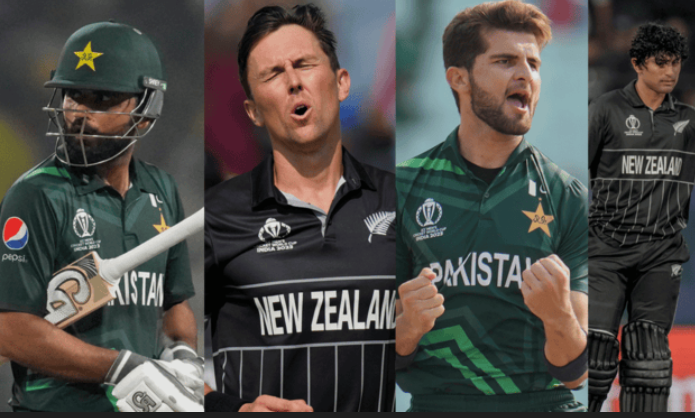
The rivalry between the New Zealand National Cricket Team and Pakistan National Cricket Team has produced some of the most unpredictable and emotional matches in international cricket. From slow-paced Test battles in the 1950s to high-pressure World Cup clashes and thrilling T20 finishes, both teams have constantly challenged each other with different styles of cricket. Pakistan’s aggressive flair and natural match winners often collided with New Zealand’s disciplined planning and calm execution. Over the decades, legendary players, unforgettable scorecards, dramatic collapses, and iconic partnerships have shaped this rivalry into one of cricket’s most respected and entertaining international contests.
Here are all the tables compiled from our previous discussions, stripped entirely of links and symbols.
Official ICC Team Standings
Format
New Zealand Rank
New Zealand Points / Rating
Pakistan Rank
Pakistan Points / Rating
Test Cricket
5th
1,717 Pts / 101 Rating
6th
1,154 Pts / 89 Rating
WTC (2025–27)
2nd
77.78% PCT
8th
11.11% PCT
Recent Matches
Date
Format
Venue
Winner / Outcome
Feb 21, 2026
T20I (World Cup)
Colombo, Sri Lanka
No Result (Match abandoned due to rain)
Apr 05, 2025
ODI
Mount Maunganui, NZ
New Zealand won by 43 runs
Apr 02, 2025
ODI
Hamilton, NZ
New Zealand won by 84 runs
Mar 29, 2025
ODI
Napier, NZ
New Zealand won by 73 runs
Mar 26, 2025
T20I
Wellington, NZ
New Zealand won by 8 wickets
Mar 23, 2025
T20I
Mount Maunganui, NZ
New Zealand won by 115 runs
Mar 21, 2025
T20I
Auckland, NZ
Pakistan won by 9 wickets
Mar 18, 2025
T20I
Dunedin, NZ
New Zealand won by 5 wickets
Mar 16, 2025
T20I
Christchurch, NZ
New Zealand won by 9 wickets
Head-to-Head Evolution Summary
Format
Total Played
Pakistan Wins
New Zealand Wins
Ties / Draws
No Result
Test Matches
62
25
14
23
0
ODIs
125
62
59
1
3
T20Is
50
24
23
0
3
Total Overall
237
111
96
24
6
Top Individual Performances
Record Category
Format
Top Performer
Record / Statistic
Career Span / Match Date
Most Runs (Career)
Test
Javed Miandad (PAK)
1,919 runs
1976–1993
ODI
Inzamam-ul-Haq (PAK)
1,283 runs
1992–2004
T20I
Babar Azam (PAK)
880 runs
2018–2026
Highest Score (Innings)
Test
Inzamam-ul-Haq (PAK)
329 runs
May 2002 (Lahore)
ODI
Fakhar Zaman (PAK)
180 runs
April 2023 (Rawalpindi)
T20I
Finn Allen (NZ)
137 runs
Jan 2024 (Dunedin)
Most Wickets (Career)
Test
Waqar Younis (PAK)
70 wickets
1990–2002
ODI
Waqar Younis (PAK)
79 wickets
1990–2002
T20I
Tim Southee (NZ)
38 wickets
2010–2025
Best Bowling (Innings)
Test
Richard Hadlee (NZ)
7/116
Feb 1985 (Christchurch)
ODI
Shoaib Akhtar (PAK)
6/16
April 2002 (Karachi)
T20I
Umar Gul (PAK)
5/6
June 2009 (The Oval)
Biggest Wins and Closest Matches
Category / Format
Winner
Winning Margin
Match Details & Venue
Date
Biggest Win (Test)
Pakistan
Innings and 324 runs
Lahore (PAK dismissed NZ for 73 and 246)
May 2002
Biggest Win (ODI)
New Zealand
183 runs
Nelson (NZ: 257, PAK: 74)
Jan 2018
Biggest Win (T20I)
New Zealand
115 runs
Mount Maunganui (NZ: 220/6, PAK: 105)
Mar 2025
Closest Win (Test)
New Zealand
4 runs
Abu Dhabi (PAK collapsed chasing 176)
Nov 2018
Closest Win (ODI)
Pakistan
21 runs (DLS)
Bengaluru (World Cup – Fakhar Zaman 126)
Nov 2023
Closest Win (T20I)
New Zealand
4 runs
Lahore (NZ: 178/7, PAK: 174/8)
Apr 2024
The First Time New Zealand and Pakistan Shared the Field
The rivalry between the New Zealand National Cricket Team and Pakistan National Cricket Team started with intense Test battles in the 1950s. Pakistan relied on stylish batting and spin control, while New Zealand focused on discipline and seam bowling. Their early matches were slow but highly competitive, especially on difficult pitches in Karachi and Lahore. Pakistan dominated at home because of strong batting depth led by Hanif Mohammad and Majid Khan. New Zealand improved during home conditions where swing bowling became dangerous. These early matches built mutual respect and created a rivalry filled with tactical cricket, patience, and pressure moments. Fans slowly became emotionally invested as every series started producing dramatic finishes and memorable scorecards.
Season
Score
Winner
Best Performance
Venue
1955
Pakistan 354/6
Pakistan
Hanif Mohammad 103
Karachi
1965
NZ 287/5
New Zealand
Graham Dowling 89
Auckland
1973
Pakistan 402/7
Pakistan
Majid Khan 117
Lahore
1976
Match Drawn
Draw
Hadlee 5 wickets
Wellington
When Pakistan’s Unpredictability Troubled New Zealand
Pakistan became one of the most dangerous teams for New Zealand during the 1980s and 1990s because of their unpredictable style. Players like Imran Khan, Wasim Akram, and Waqar Younis could change matches within a single spell. New Zealand often struggled against reverse swing and aggressive fast bowling under pressure. Pakistan’s confidence grew after dramatic comeback victories in both Tests and ODIs. The rivalry also became emotional as crowds in Lahore and Auckland created intense atmospheres. New Zealand responded with tactical discipline and strong fielding, but Pakistan’s flair remained difficult to control. Several matches ended with shocking collapses and late turnarounds that made this rivalry one of cricket’s most entertaining contests during that era.
Season
Score
Winner
Best Performance
Key Moment
1985
Pakistan 265/8
Pakistan
Imran Khan 6 wickets
Late collapse
1990
Pakistan 214/5
Pakistan
Wasim Akram spell
Reverse swing
1992
Pakistan 262/9
Pakistan
Inzamam 60
World Cup semifinal
1994
NZ 241/7
New Zealand
Morrison 4 wickets
Bowling comeback
Richard Hadlee vs Pakistan’s Batting Giants
Richard Hadlee played a massive role in shaping this rivalry with his brilliant pace bowling against Pakistan’s strongest batting lineup. Hadlee’s seam movement and accuracy constantly tested players like Javed Miandad and Zaheer Abbas. Pakistan respected his ability to dominate even on flat batting pitches. Several matches turned into personal battles between Hadlee and Pakistan’s technically gifted batters. New Zealand depended heavily on his bowling breakthroughs, especially during difficult overseas tours. Pakistan countered with aggressive strokeplay and patience during long innings. These contests helped the rivalry grow beyond team competition because fans became fascinated by individual battles. Hadlee’s performances remain among the most respected bowling displays in New Zealand cricket history.
Year
Score
Winner
Best Performance
Rivalry Moment
1978
NZ 310
NZ
Hadlee 6 wickets
Pace dominance
1984
Pakistan 345
Pakistan
Miandad century
Tactical battle
1988
Drawn Match
Draw
Hadlee 7 wickets
Bowling masterclass
1990
Pakistan 289/4
Pakistan
Ramiz Raja 95
Pressure chase
The World Cup Battles That Changed the Rivalry Forever
World Cup matches completely transformed the rivalry between New Zealand and Pakistan. The 1992 semifinal remains one of the most emotional matches in cricket history after Pakistan chased New Zealand’s total under huge pressure. Inzamam ul Haq’s fearless innings shocked New Zealand fans and changed Pakistan’s tournament forever. Later ICC tournaments continued producing dramatic contests filled with tactical bowling and nervous finishes. New Zealand often entered games with strong balance and planning, while Pakistan relied on natural flair and momentum. Every World Cup meeting carried massive emotional pressure because one mistake could end a campaign. These high stakes helped the rivalry gain worldwide attention and made every Pakistan versus New Zealand clash unpredictable and unforgettable.
Tournament
Score
Winner
Best Performance
Importance
1992 WC
Pakistan 262/9
Pakistan
Inzamam 60
Historic semifinal
1999 WC
Pakistan 269/7
Pakistan
Shoaib Akhtar spell
Pace dominance
2011 WC
Pakistan 250/9
Pakistan
Afridi 5 wickets
Knockout pressure
2023 WC
Pakistan 200/1
Pakistan
Fakhar Zaman 126
Record chase
Shoaib Akhtar’s Pace Against New Zealand’s Calm Approach
Shoaib Akhtar added aggression and raw pace to this rivalry during the early 2000s. His speed frightened many New Zealand batters, especially on fast pitches where bounce became difficult to control. Shoaib’s fiery spells often changed the momentum of matches within a few overs. New Zealand responded with calm batting and smart rotation instead of emotional reactions. Stephen Fleming and Nathan Astle played important roles in resisting Pakistan’s fast bowling attacks. The rivalry became highly entertaining because Pakistan brought emotion and aggression while New Zealand relied on discipline and patience. Fans loved the contrast in styles, and several matches became memorable because of fast bowling dominance and dramatic batting recoveries.
Match
Score
Winner
Best Performance
Turning Point
2001 ODI
Pakistan 244/7
Pakistan
Shoaib 5 wickets
Opening burst
2002 Test
Match Drawn
Draw
Astle 102
Counterattack innings
2003 WC
Pakistan 241/9
Pakistan
Shoaib pace spell
Early wickets
2005 ODI
NZ 286/5
New Zealand
McMillan 91
Controlled chase
Brendon McCullum and Kane Williamson Redefined the Rivalry
Brendon McCullum and Kane Williamson changed New Zealand cricket with fearless batting and intelligent captaincy. Under their leadership, New Zealand became more aggressive in T20s and ODIs against Pakistan. McCullum attacked bowlers during powerplays, while Williamson focused on calm tactical control during pressure moments. Pakistan still remained dangerous with players like Mohammad Amir and Babar Azam producing match-winning performances. This modern era featured close finishes, tactical bowling changes, and smarter field placements. Fans enjoyed the balance between Pakistan’s flair and New Zealand’s discipline. The rivalry evolved into a battle of strategy where even small mistakes decided results in important bilateral series and ICC tournaments.
Season
Score
Winner
Best Performance
Tactical Highlight
2014
NZ 303/6
New Zealand
McCullum 101
Powerplay attack
2016
Pakistan 171/8
Pakistan
Amir swing spell
New ball pressure
2018
Series Drawn
Draw
Williamson consistency
Balanced cricket
2022
NZ 160/5
New Zealand
Santner economy
Spin control
Babar Azam, Shaheen Afridi and the New Generation Pressure Battles
The rivalry entered a modern phase with Babar Azam and Shaheen Afridi leading Pakistan against New Zealand’s balanced lineup. Babar brought elegant batting consistency while Shaheen’s fast bowling created early breakthroughs in pressure matches. New Zealand answered with disciplined bowling from Trent Boult, Tim Southee, and Mitchell Santner. T20 cricket increased the intensity because matches were often decided in the final overs. Tactical decisions like powerplay batting, death bowling, and spin matchups became more important than ever. Both teams now study conditions carefully and use advanced planning during ICC tournaments. The rivalry continues to produce thrilling contests filled with pressure, emotion, and unforgettable scorecards.
Series
Score
Winner
Best Performance
Key Moment
2021 T20
Pakistan 177/6
Pakistan
Babar 79
Strong opening stand
2022 Tri Series
NZ 163/7
New Zealand
Southee 3 wickets
Final over defense
2023 ODI
Pakistan 337/3
Pakistan
Fakhar 180
Huge chase
2024 T20
NZ 179/8
New Zealand
Santner spell
Middle overs control
Conclusion
The New Zealand versus Pakistan rivalry continues to stand out because it combines skill, emotion, pressure, and unpredictability in every format of the game. Generations of cricketers from both nations have contributed unforgettable moments, from Richard Hadlee’s bowling brilliance to Babar Azam’s modern batting consistency. ICC tournaments, bilateral series, and dramatic last-over finishes have strengthened the competitive bond between these teams. While Pakistan often brings aggression and natural flair, New Zealand answers with patience, tactical discipline, and teamwork. That contrast keeps the rivalry exciting for cricket fans around the world. As new players emerge and future tournaments arrive, this historic cricket battle promises even more memorable scorecards and rivalry moments.
Rahul is a cricket enthusiast and writer who loves breaking down team journeys, player milestones, and key cricket moments into simple timelines. At National Cricket Team Timelines, he focuses on clear, accurate, and engaging cricket stories for fans who enjoy the game beyond just scores.